Some links in this guide are affiliate links. If you book through them, we may earn a commission at no extra cost to you. It never changes what we recommend.
By Worldly Travels Editorial Team · Last verified: November 2026
Quick Answer
Is Morocco safe? Yes, for most tourists. The UK government does not advise against travel to any part of Morocco itself; its only no-go zones are in the disputed Western Sahara, far from the usual routes. The US rates Morocco Level 2, “exercise increased caution”, mainly because of the terrorism risk.
The real problems are smaller: pickpockets in the medinas, scams, aggressive selling and unwanted attention, especially towards women travelling alone. Violent crime against tourists is rare.
Is Marrakech safe? Yes, with street sense. It is the busiest city for tourists, so it also has the most hustlers. Learn the common scams below and you will avoid most trouble. Planning your days there? See our 3 days in Marrakech itinerary.
In this guide
What UK and US Travel Advice Says in 2026
| UK (FCDO) | US (State Dept) | |
|---|---|---|
| Overall | No advice against travel to Morocco | Level 2: Exercise increased caution |
| Main reason | Terrorism threat (global), petty crime | Terrorism |
| No-go areas | Western Sahara near and beyond “the Berm”, including Es Semara | Not stated as separate zones |
| Crime | “Petty crime is common in tourist areas, especially in historical districts (medina quarters) and on beaches” | — |
The FCDO also notes that the land and sea borders with Algeria are closed, and crossing them is illegal. None of this touches Marrakech, Fes, Casablanca, Chefchaouen, Essaouira, Agadir or the Sahara tours to Merzouga and Zagora.
Check the FCDO Morocco page the week you fly. Advice can change quickly.
Is Marrakech Safe? And the Other Cities
| City | How safe it feels | Main thing to watch |
|---|---|---|
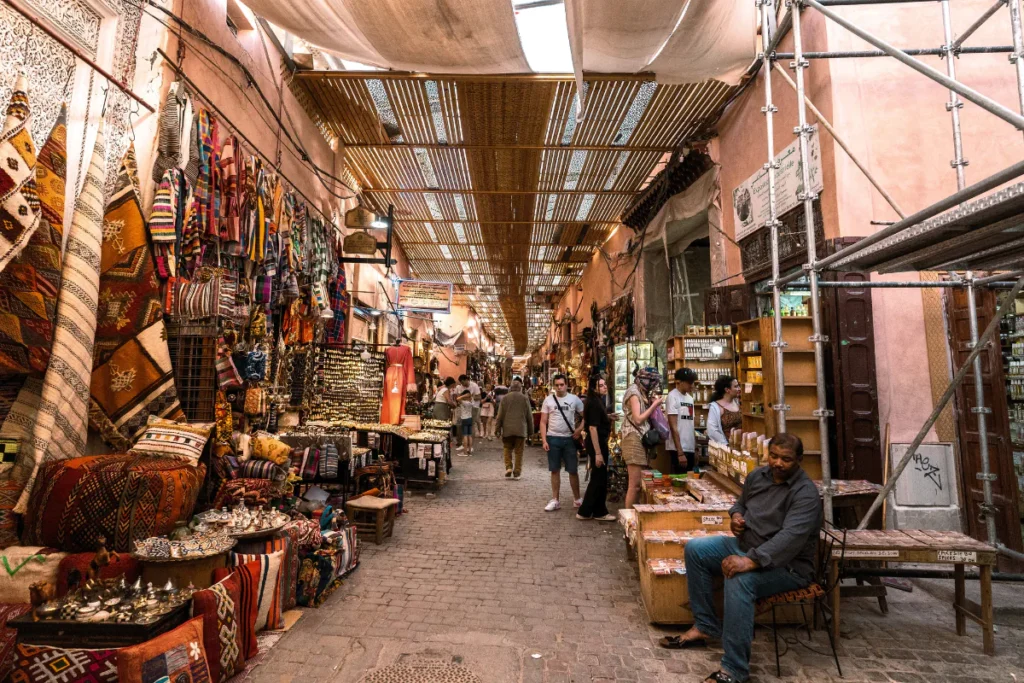
| Marrakech | Safe, but the most hassle | Fake guides, scooters in the medina, Jemaa el-Fna scams |
| Fes | Safe | Getting lost in the medina, guides who expect payment |
| Casablanca | Safe in central areas | Bag snatching, taxis at night |
| Tangier | Safe, calmer than its old reputation | Touts at the port |
| Chefchaouen | Very relaxed | Little to worry about; offers of hashish |
| Essaouira | Very relaxed | Windy beach, little else |
| Agadir | Safe beach resort | Petty theft on the beach |
In the Marrakech medina, the biggest physical risk is traffic, not crime. Motorbikes ride through narrow lanes at speed. Walk on the side and keep your bag on the wall side.
Common Scams in Morocco and How to Avoid Them
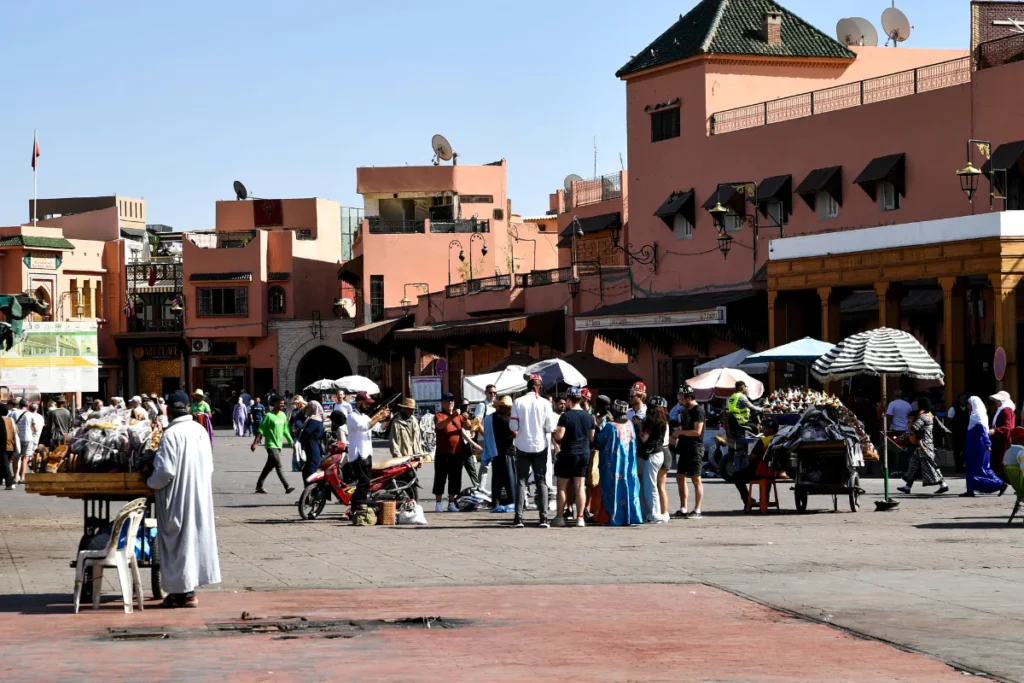
- Fake guides: A friendly stranger says the road is closed or offers to show you the way, then asks for money or leads you to a shop that pays him commission. Say “la, shukran” (no, thank you) and keep walking. Hire licensed guides through your riad.
- Henna: A woman grabs your hand and starts drawing, then asks for a large fee. Keep your hands to yourself in Jemaa el-Fna.
- Taxis: Drivers refuse the meter. Ask for “le compteur” before you get in, or agree the price first. From the airport, a fixed-price transfer avoids the argument.
- Food stalls: Bread and olives arrive unordered and appear on the bill. Ask prices first and send back what you don’t want.
- Photos: Snake charmers, monkey handlers and dancers expect money for photos. Ask the price first, or don’t take one.
- Fake goods: Cheap argan oil is often diluted, and perfect fossils are often fake. Buy argan from a cooperative.
High prices in the souks are not a scam. Haggling is normal; decide your price before you start.
Is Morocco Safe for Women and Solo Travellers?
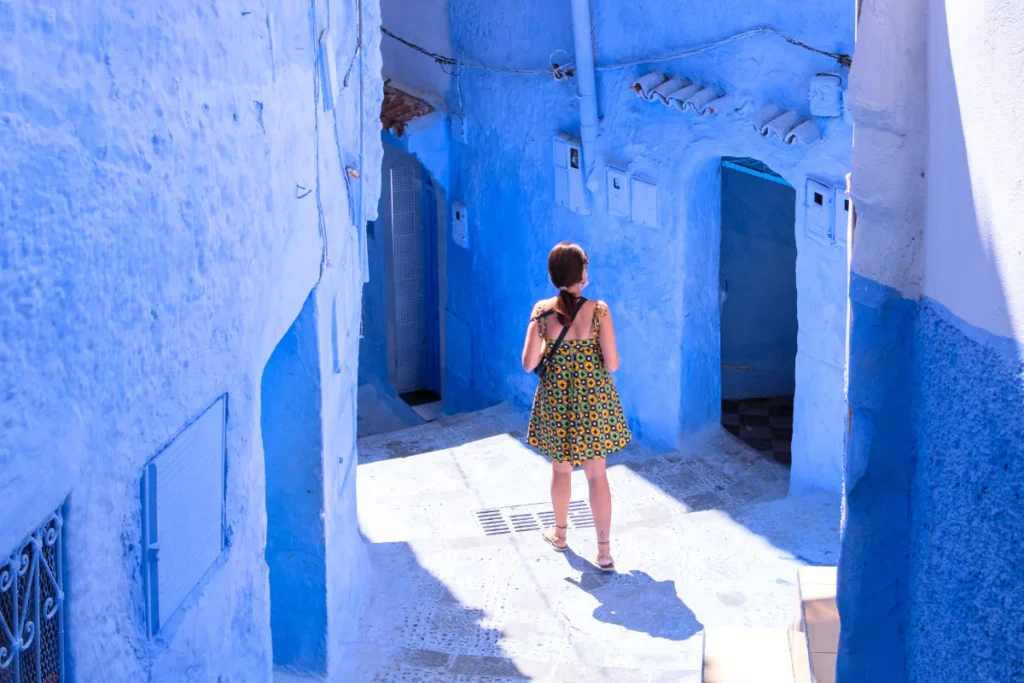
Yes, but expect attention. The FCDO puts it plainly: “Women may receive unwanted attention in Morocco, especially when travelling alone.” That usually means comments and people following you for a few steps, not physical danger.
- Wear loose clothes that cover shoulders and knees in the medinas and small towns.
- Don’t answer comments; walk on with purpose. Engaging makes it last longer.
- Pick a riad with good reviews from solo women, and ask it to arrange your airport pickup.
- After dark, stay on busy streets or take a taxi.
- Join a group tour for the desert if you don’t want to travel alone.
LGBT+ travellers: Same-sex relations are illegal in Morocco, and public displays of affection can lead to prosecution. Be discreet in public and careful with dating apps.
Areas to Avoid, Roads and Taxis
Areas to avoid: The FCDO advises against all travel to the parts of Western Sahara within 40 km of “the Berm” (including Es Semara) and the territory beyond it. The border with Algeria is closed; don’t try to cross. Normal tourist routes go nowhere near these areas.
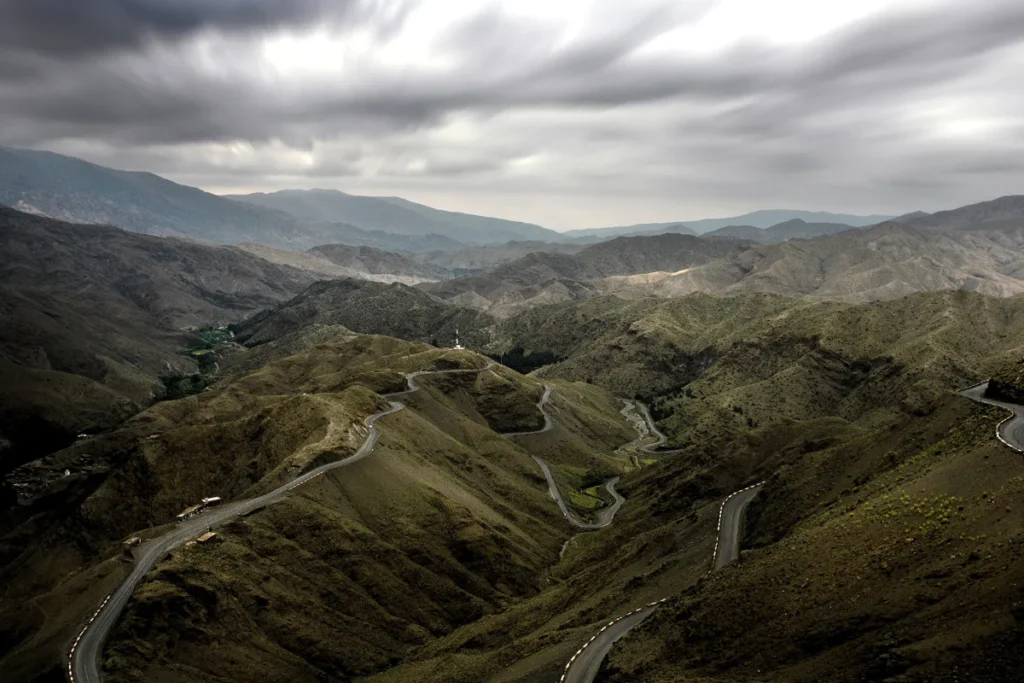
Roads: Road accidents are the real danger in Morocco. Avoid driving at night, take mountain roads like the Tizi n’Tichka pass slowly, and choose an experienced driver for long tours. If you drive yourself, compare car hire in Marrakech and pick full insurance. UK drivers need their licence, an International Driving Permit (1968) and a green card from the insurer.
Taxis: Petit taxis are for inside a city and should use the meter. Grand taxis go between towns and are shared. Pre-book an airport transfer if you land late.
Mountains: In winter, flash floods can hit valleys and rivers. Hike the Atlas with a local guide.
Food and Water
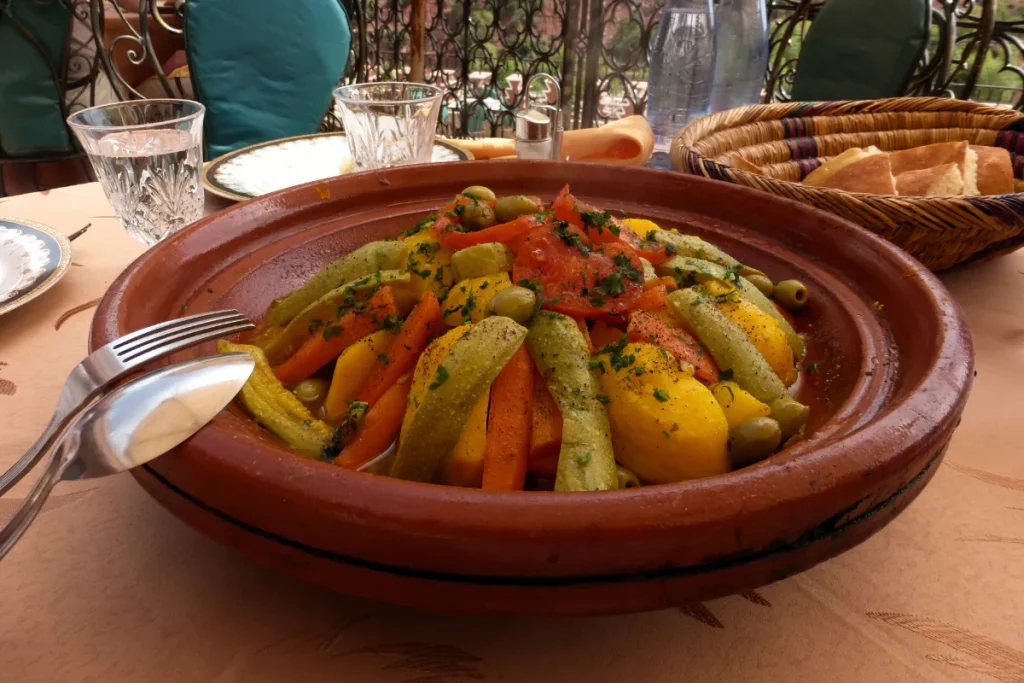
Most travel stomach problems in Morocco come from water and raw food, not from street food itself.
- Drink bottled water and check the seal.
- Eat at busy stalls where food is cooked in front of you.
- Be careful with salads and fruit you didn’t peel yourself in the first days.
- Get travel insurance that covers medical care; private clinics in big cities are good but not free.
Morocco Safety Checklist Before You Go
- Read the FCDO Morocco page the week you fly
- Buy travel insurance that covers medical care and your activities
- Pre-book your airport transfer for the first night
- Set up a Morocco eSIM so you have maps and calls from landing
- Save the emergency numbers: police 19, ambulance and fire 15
- Carry a copy of your passport; leave the original in the riad safe
- Take small notes in dirhams for taxis and tips
- Pack clothes that cover shoulders and knees
Frequently Asked Questions
Is Morocco safe for tourists right now?
Yes. The UK does not advise against travel to Morocco itself, and the US rates it Level 2. Petty crime and scams are the main issues, mostly in medinas and on beaches.
Is Marrakech safe at night?
The main squares and streets are busy and safe in the evening. In the quiet back lanes of the medina, walk with someone or take a taxi late at night.
Is Morocco safe for solo female travellers?
Yes, but expect comments and unwanted attention. Dress conservatively, don’t engage, and choose well-reviewed riads and tours.
Which areas of Morocco should tourists avoid?
Only parts of the disputed Western Sahara near and beyond “the Berm”, plus the closed Algerian border. All the usual tourist cities and desert tours are fine.
Is it safe to drink tap water in Morocco?
Most visitors stick to bottled water to avoid an upset stomach. It is cheap and sold everywhere.