
Some trips you take. Others rearrange something in you.
There is a difference between a good holiday and a place that becomes a permanent reference point in your life. The first is pleasant and forgettable. The second changes the scale you measure things by: you stand in front of it, and every photograph you have ever seen of it turns out to have been lying by omission.
The places to visit once in a lifetime on this list earn that status for one of three reasons. Some are physically overwhelming, on a scale that photographs genuinely cannot carry. Some are irreplaceable, built or grown over centuries and impossible to reproduce anywhere else. And some are simply difficult enough to reach that arriving feels like an achievement in itself.
Below are 23 places to visit once in a lifetime, spread across six continents, from Peruvian cloud forest to Antarctic ice. Each entry covers why it deserves the trip and when to go, followed by advice on choosing the right one for you and planning it properly.
Best Places to Visit Once in a Lifetime Around the World
These 23 places to visit once in a lifetime are grouped loosely by region rather than ranked against each other. Skip ahead to the selection guide further down if you would rather choose by the type of experience you want.
1. Machu Picchu, Peru
Why visit. It heads almost every list of places to visit once in a lifetime, and it earns the position. A 15th-century Inca citadel balanced on a ridge 2,430 metres above the Urubamba River, abandoned within a century of being built and left largely untouched by the Spanish. What astonishes visitors is not the ruins alone but the engineering logic behind them: terraces that stopped the mountain from sliding away, stonework cut so precisely it needs no mortar, and drainage that still works six hundred years later. The cloud forest below moves constantly, so the site appears and disappears while you watch it.
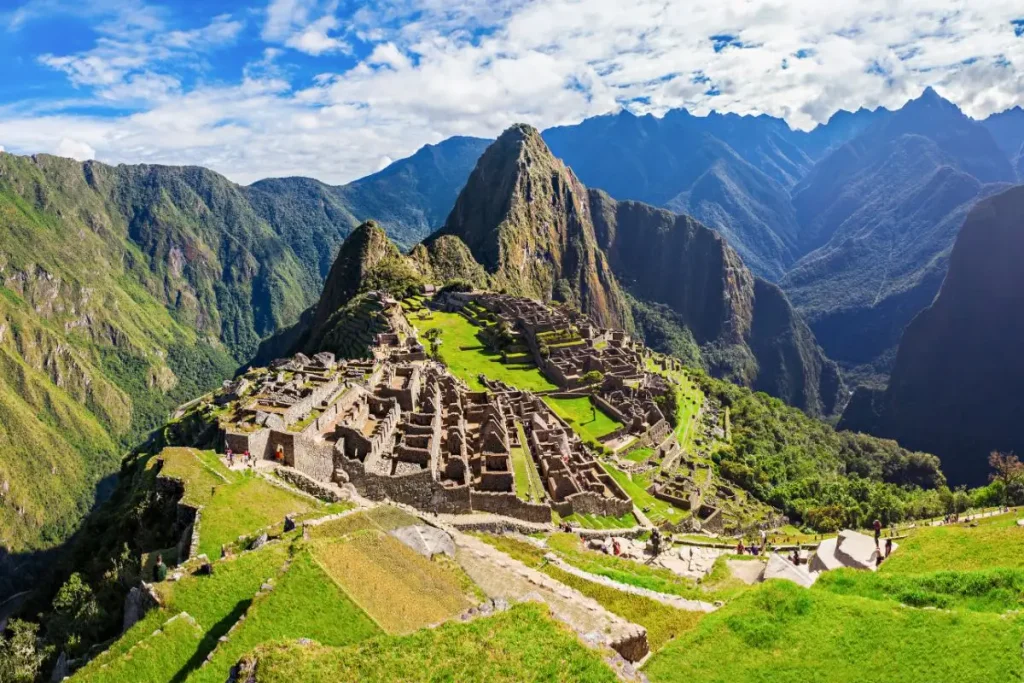
Best time to go. May to September is the dry season and the most reliable. April and October are quieter shoulder months with a real chance of clear mornings. Entry is by timed ticket on fixed circuits, and the classic Inca Trail requires a permit booked months ahead. The trail closes each February for maintenance.
2. Cappadocia, Türkiye
Why visit. Volcanic ash compacted into soft rock, then carved by wind and water into a landscape of ridges, cones and hollows, which people have been tunnelling into since the Bronze Age. There are rock-cut churches with Byzantine frescoes still on the walls and underground cities that sheltered thousands of people at a time.
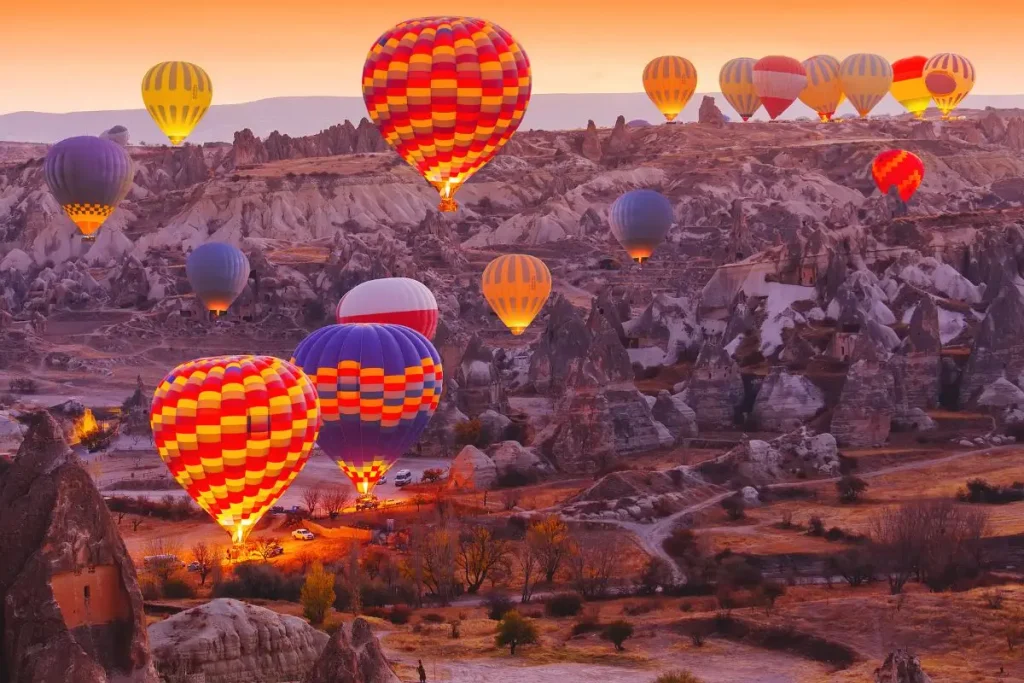
Best experiences. The dawn balloon flight is the famous one, and it deserves the reputation: a hundred envelopes lifting together into a lilac sky. Flights are weather-dependent and often cancelled in wind, so give yourself several mornings. Beyond that, walk the Göreme Open Air Museum, hike Rose Valley in late afternoon light, and descend into Derinkuyu. April to June and September to October offer the mildest weather.
3. Pyramids of Giza, Egypt
Why visit. The last surviving wonder of the ancient world, and the only structure on this list that was already impossibly old when the Romans came to look at it. The Great Pyramid held the record for tallest human-made structure for roughly 3,800 years. Standing at the base, the individual blocks are the shock most are taller than you.
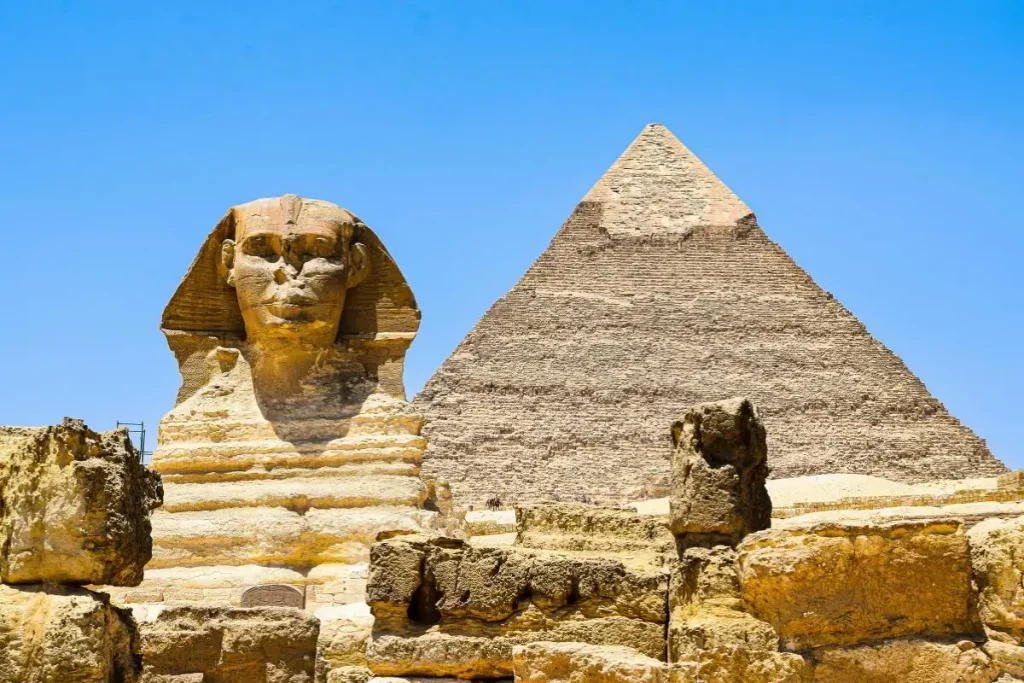
What to see. The three main pyramids, the Sphinx, and the Solar Boat pit. Then give at least half a day to the Grand Egyptian Museum near the plateau, which now houses the complete Tutankhamun collection in one place for the first time. November to March is comfortable; summer on the plateau is punishing.
4. Bora Bora, French Polynesia
Why visit. A collapsed volcano ringed by a barrier reef, which produces a lagoon in about nine distinguishable shades of blue with the jagged remains of Mount Otemanu rising out of the middle. It is the archetype of the overwater bungalow, and the archetype turns out to be accurate.
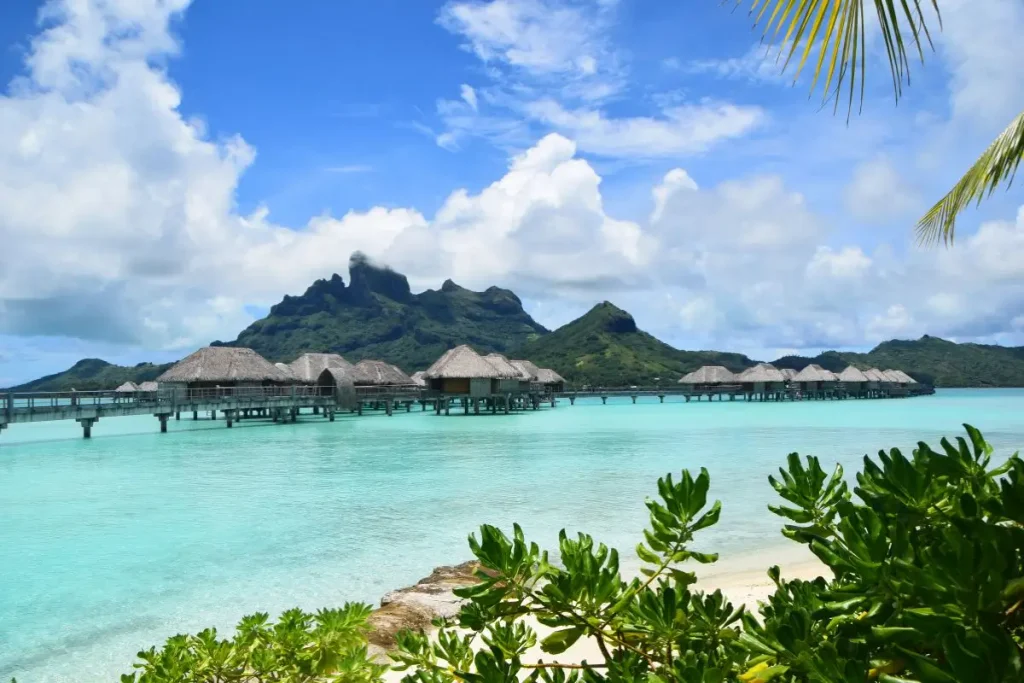
Best experiences. A lagoon tour with snorkelling among rays and blacktip reef sharks, a 4×4 trip into the interior for the wartime gun emplacements and viewpoints, and a boat out to the outer reef at sunset. The dry season runs May to October, with the calmest water and lowest humidity. Book far ahead and expect the pricing to match the reputation.
5. Grand Canyon, USA
Why visit. Two billion years of exposed rock, 446 kilometres long and over a mile deep. The canyon defeats first-time visitors because the eye has nothing to scale it against: the river at the bottom looks like a thread, and it is 90 metres wide. Weather systems form inside it.
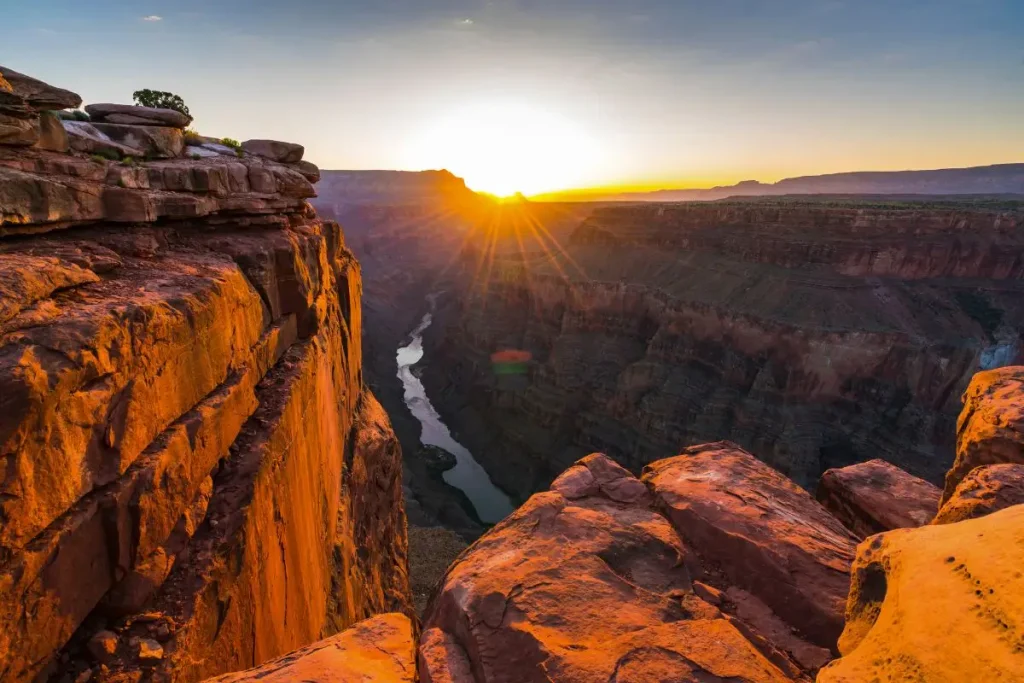
Best viewpoints and activities. On the South Rim, Mather Point for the first look, Hopi Point for sunset, and the Desert View Watchtower for the widest eastern panorama. Walk at least a short way down the Bright Angel Trail descending changes everything about the perspective. A rafting trip through the inner gorge is the definitive version and books out a year or more in advance. The South Rim is open all year; the North Rim is seasonal and has been affected by recent wildfire, so check current access before planning around it.
6. Salar de Uyuni, Bolivia
Why visit. The world’s largest salt flat, more than 10,000 square kilometres of blinding white crust at 3,650 metres of altitude. It is so flat that satellites use it for calibration. In the wet season a thin film of water turns the whole surface into a mirror, and the horizon disappears entirely you walk through cloud reflections with no sense of up or down.
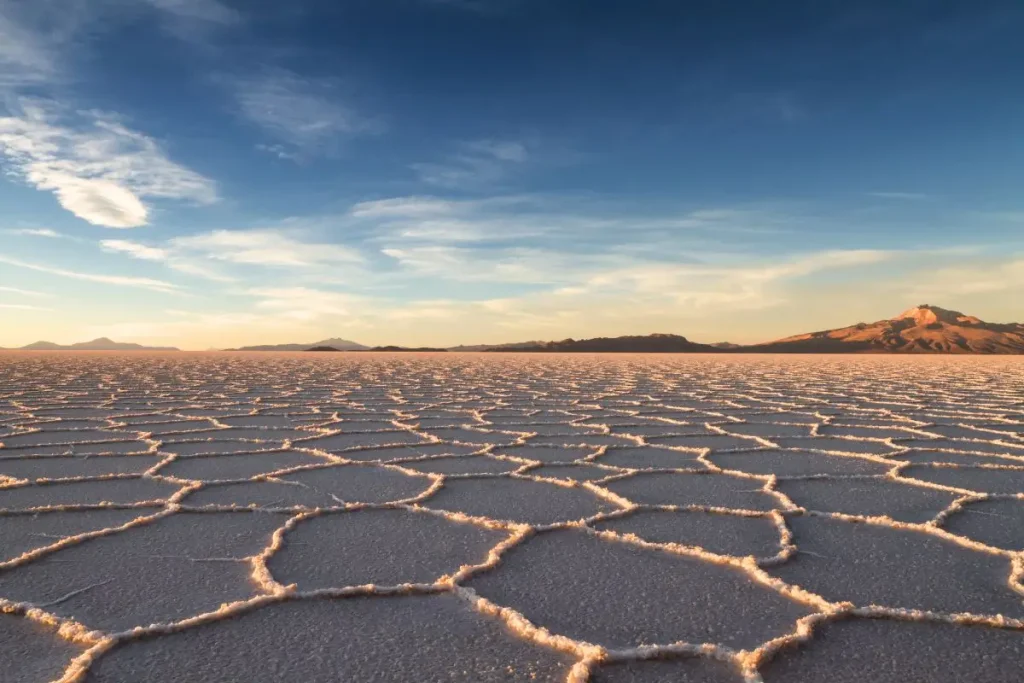
Best time to experience the salt flats. December to April for the mirror effect, though heavy rain can close sections. May to November for the dry season, when the salt forms hexagonal polygons and vehicles can cross to Incahuasi Island with its giant cacti. Multi-day tours continue south to the coloured lagoons and flamingo colonies. Altitude is real here acclimatise in La Paz or Uyuni first.
7. Petra, Jordan
Why visit. Few places to visit once in a lifetime reveal themselves as theatrically as this one. The Nabataean capital was carved directly into rose-coloured sandstone cliffs by traders who controlled the incense routes two thousand years ago. The approach makes it: you walk more than a kilometre through the Siq, a narrow fissure with walls two hundred metres high, and the Treasury facade reveals itself through a gap barely wider than a doorway.
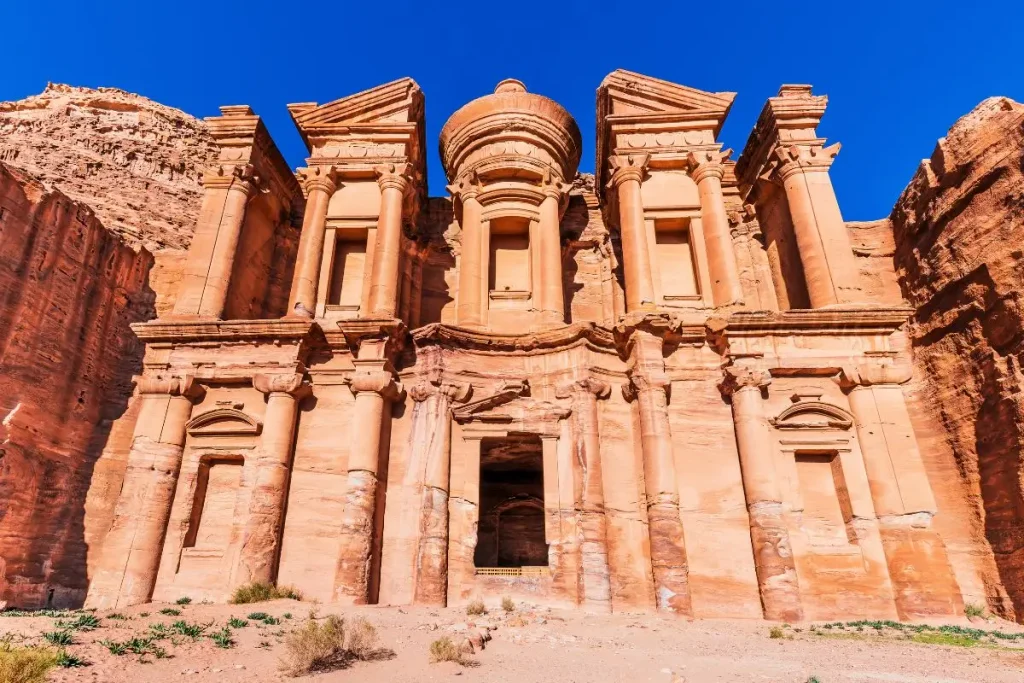
Highlights to explore. Beyond the Treasury, the site opens into a whole city of tombs, a Roman theatre and a colonnaded street. Climb the 800-odd steps to the Monastery, which is larger than the Treasury and far emptier. Give it two days minimum. March to May and September to November are ideal; midsummer is brutal in the canyon.
8. Great Barrier Reef, Australia
Why visit. The largest living structure on Earth, made of billions of coral polyps across 2,300 kilometres, home to more than 1,500 fish species. Slipping under the surface for the first time is a genuine sensory overload the noise of it surprises people as much as the colour.
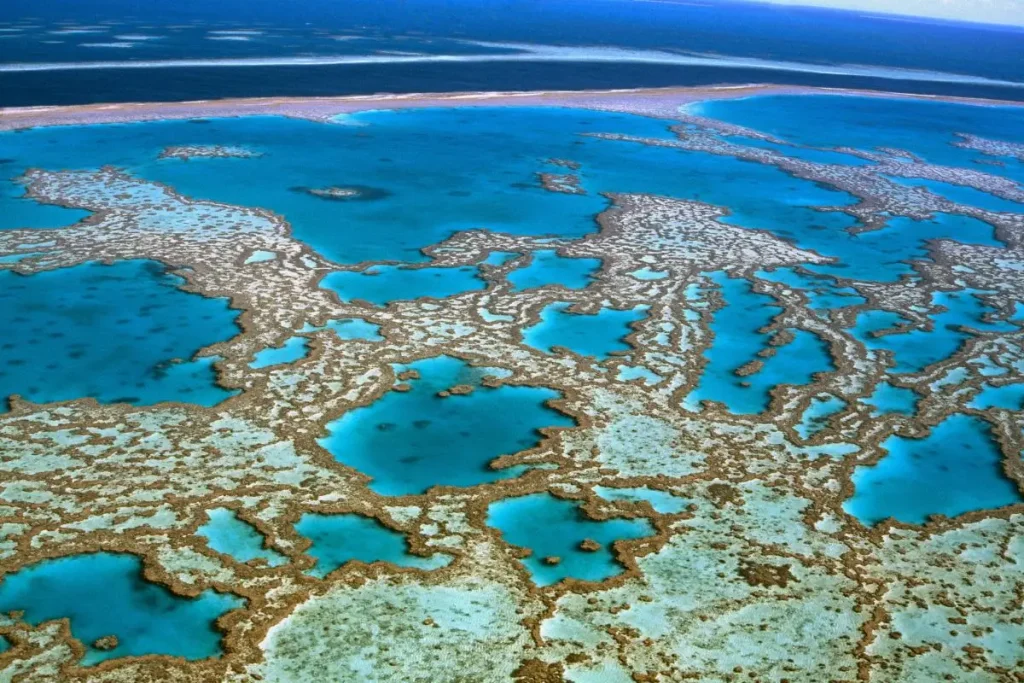
Best ways to experience it. Liveaboard dive boats reach the outer reef where coral health is strongest. Day trips from Cairns and Port Douglas are easier but busier. Non-divers can snorkel the shallow gardens around the Whitsundays or take a scenic flight over Heart Reef. June to October brings the best visibility and no stingers. The reef is under real pressure from bleaching, so choose operators with High Standard Tourism certification.
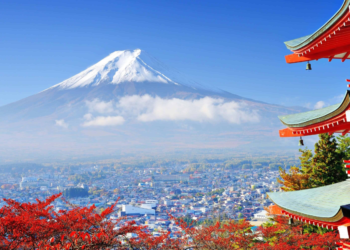
9. Kyoto, Japan
Why visit. Japan’s imperial capital for over a thousand years, with 1,600 Buddhist temples and 400 Shinto shrines still in active use. Kyoto rewards slowness. The point is not to tick off buildings but to sit in a moss garden long enough that the arrangement of rocks begins to make sense.
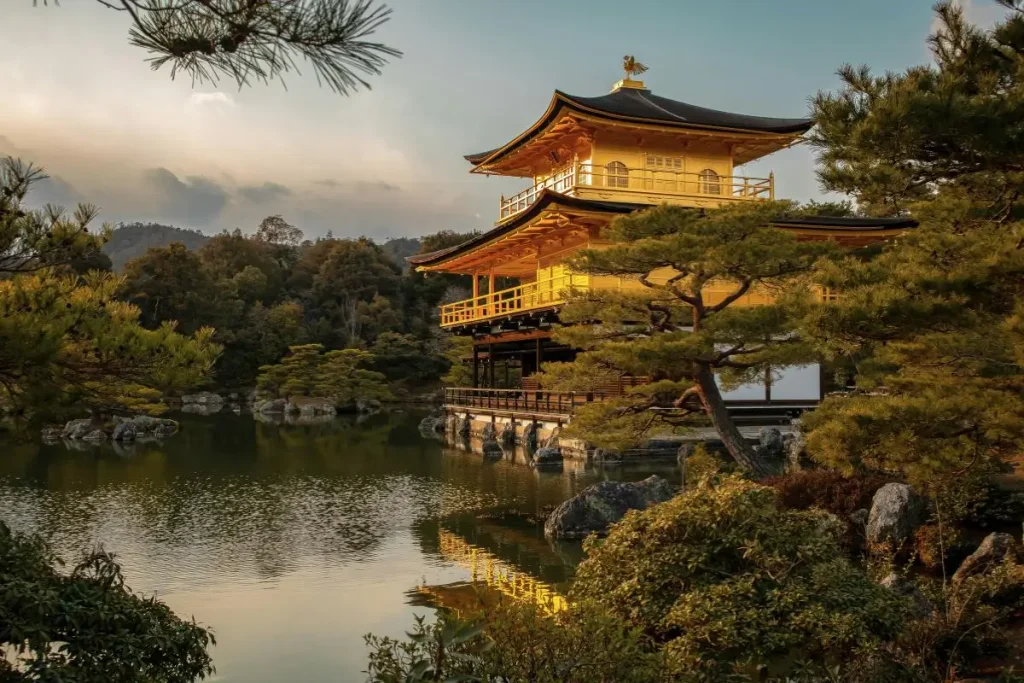
Cultural highlights. Fushimi Inari’s tunnel of vermilion gates, best walked at dawn or after dark. Kinkaku-ji, the gold pavilion, reflected in its pond. The Arashiyama bamboo grove early, before the crowds. Ryōan-ji’s dry rock garden. Evening in Gion, where geiko and maiko still work. Cherry blossom lands in early April and the maple colour peaks in late November; both are spectacular and both are extremely crowded.
10. Safari in Kenya
Why visit. Kenya is where the safari was invented, and the Masai Mara still delivers the highest density of large predators anywhere accessible to ordinary travellers. Seeing a lion pride at close range from an open vehicle recalibrates your sense of your own place in the food chain within about four seconds.
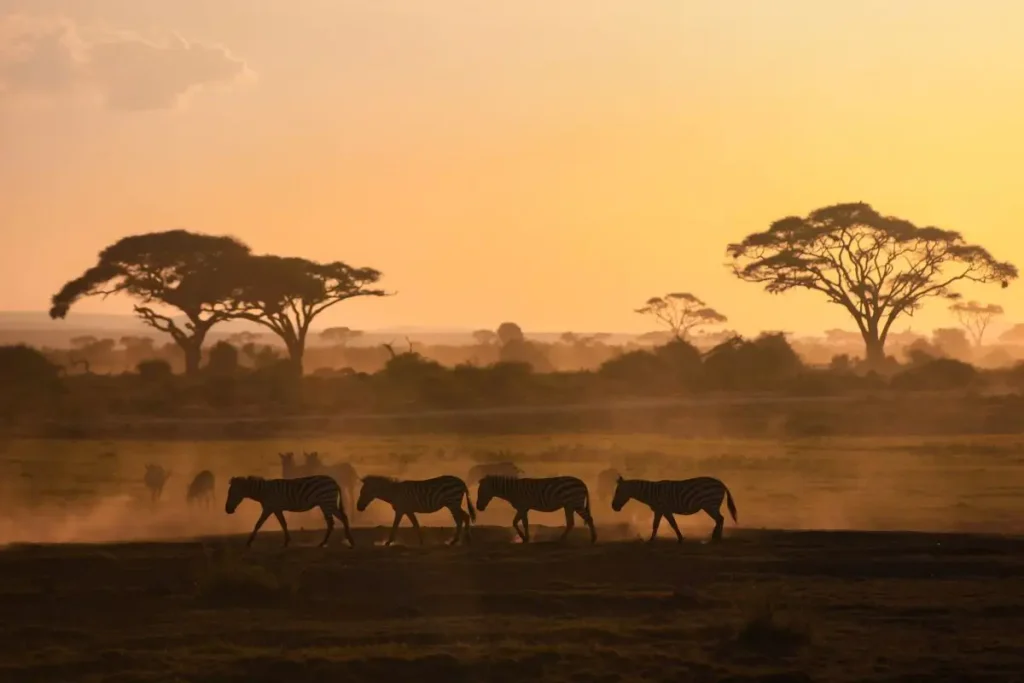
Best safari experiences. The Great Migration reaches the Mara roughly July to October, including the Mara River crossings where wildebeest run the crocodile gauntlet. Amboseli offers enormous elephant herds against Kilimanjaro. Samburu in the arid north has species you will not see further south. A dawn balloon flight over the Mara followed by breakfast on the grass is worth the early alarm. Conservancy stays cost more but limit vehicle numbers at sightings.
11. Taj Mahal, India
Why visit. A mausoleum built by Shah Jahan for Mumtaz Mahal, finished in 1653, and the most perfectly proportioned building most people will ever stand in front of. The famous fact is that the white marble changes colour through the day, pink at dawn, blinding at noon, gold at dusk. The less famous fact is the inlay work: thousands of pieces of semi-precious stone cut into the marble in floral patterns you only see up close.
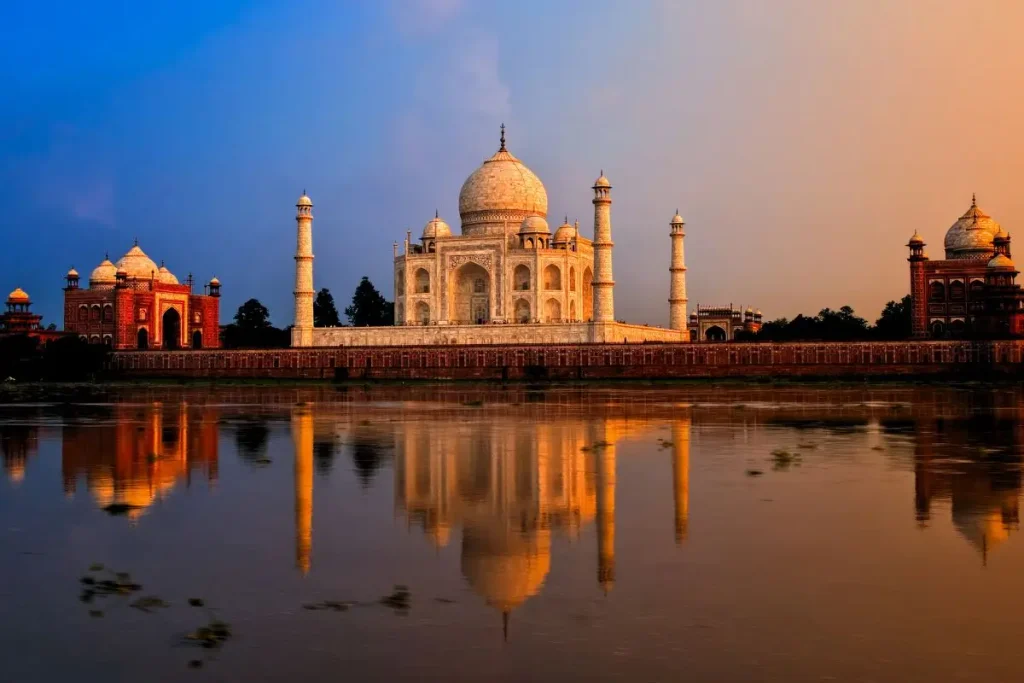
Best time to visit. October to March, arriving at sunrise for the light and the relative quiet. Closed to general visitors on Fridays. Pair it with Agra Fort, where Shah Jahan spent his final years under house arrest with a view of his wife’s tomb, and with Mehtab Bagh across the river for sunset.
12. Ha Long Bay, Vietnam
Why visit. Roughly 1,600 limestone karsts rising vertically out of emerald water in the Gulf of Tonkin, riddled with caves and topped with rainforest. Morning mist between the towers produces the ink-painting effect the bay is known for.
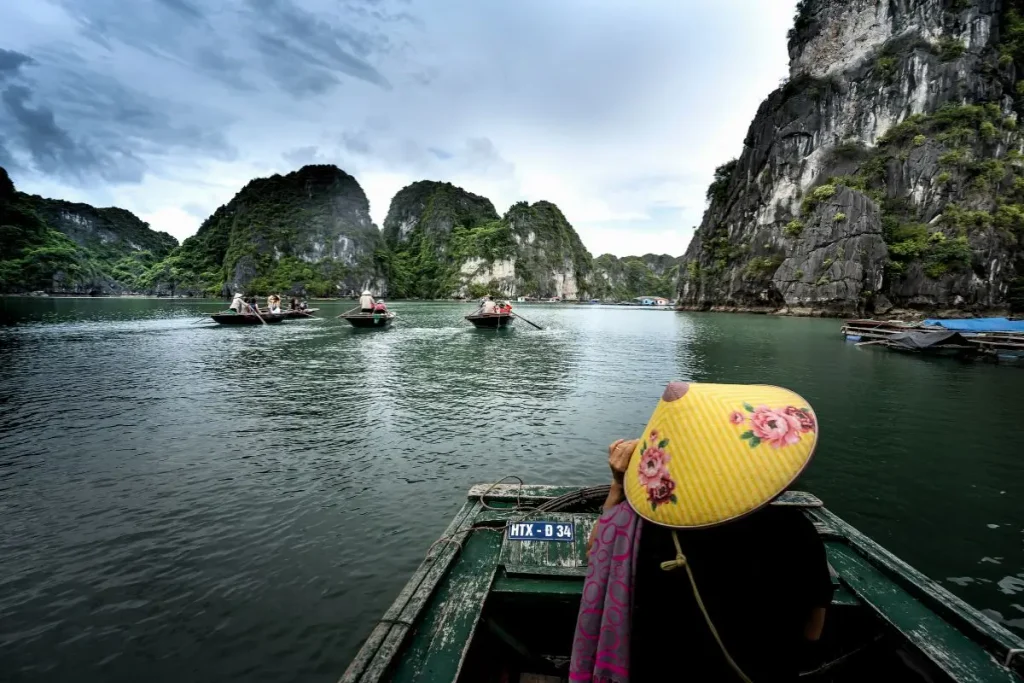
Best ways to explore. An overnight cruise is the right call the day boats leave before the bay empties out in the evening. Kayak into the hidden lagoons, swim off the boat, and visit Sung Sot cave. For fewer vessels, choose an itinerary through neighbouring Lan Ha Bay or Bai Tu Long. October to April is the best window. Avoid the July to September typhoon period, when cruises are cancelled at short notice.
13. Santorini, Greece
Why visit. The rim of a drowned volcano that erupted catastrophically around 1600 BCE, leaving a caldera 300 metres deep with white villages clinging to the cliff edge above it. The famous view is genuinely as good as advertised; the island’s Bronze Age history is the part most visitors miss.
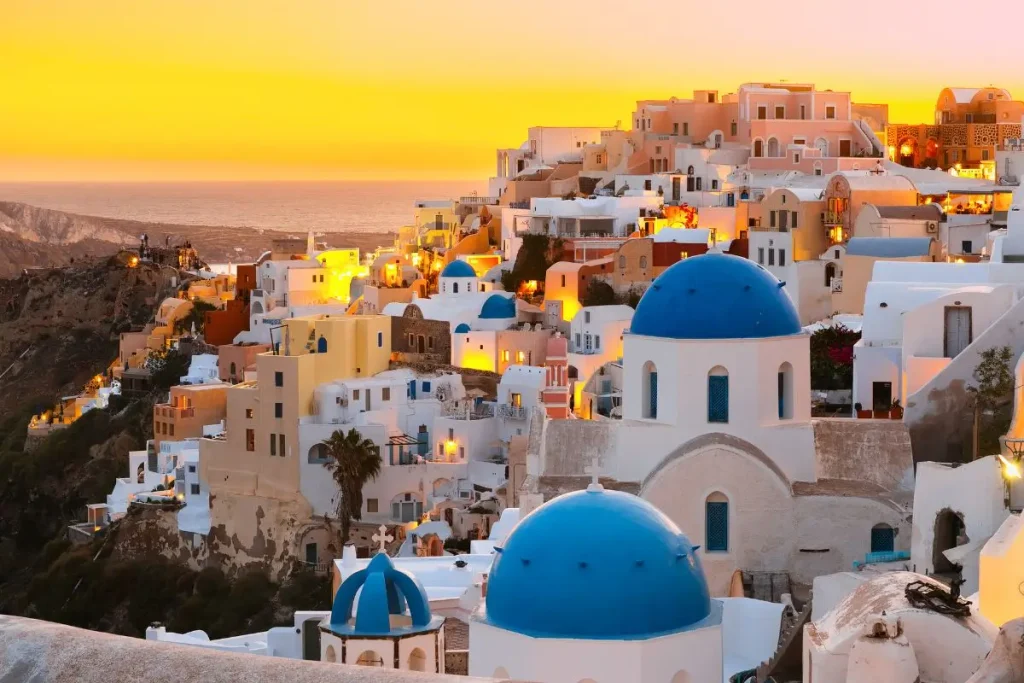
Best experiences. Sunset from Oia, arriving well before the crowd. The caldera walk from Fira to Oia along the cliff path, about three hours. Akrotiri, a Minoan town buried in ash and preserved like a smaller Pompeii. A catamaran to the hot springs and the red and white beaches. May to June and September to October give you warm sea without the July and August crush.
14. Great Wall of China
Why visit. Not one wall but a network of fortifications built and rebuilt over roughly two thousand years, running for more than 21,000 kilometres across mountains, desert and grassland. On a good section it rides the ridgelines like a spine, disappearing over one summit and reappearing on the next.
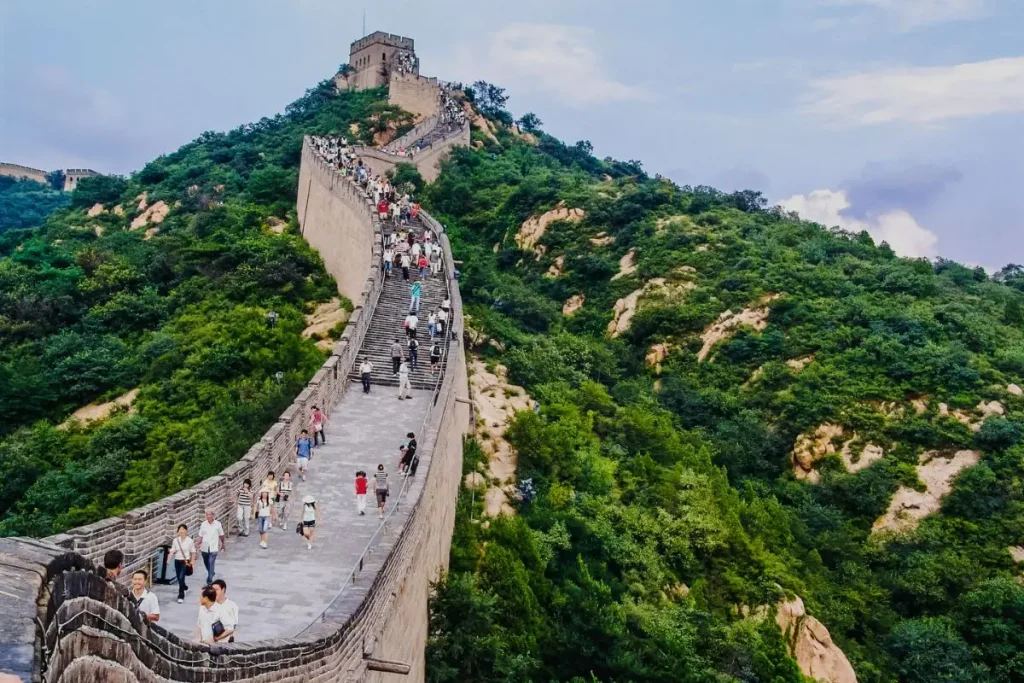
Best sections to explore. Mutianyu, well restored, dramatic, and far calmer than Badaling. Jinshanling for the classic hike along partly wild wall with watchtowers every few hundred metres. Gubeikou and Jiankou for unrestored, overgrown, genuinely rough walking go with a guide. Spring and autumn are best; summer is hazy and hot, and winter sections can be icy but beautifully empty.
15. Angkor Wat, Cambodia
Why visit. The largest religious monument in the world and one of the great places to visit once in a lifetime for anyone drawn to history, built in the 12th century as a Hindu temple and later converted to Buddhist use, at the centre of a Khmer capital that once supported perhaps three quarters of a million people. The scale of the wider Angkor complex is the surprise: the main temple is one of hundreds spread across 400 square kilometres.
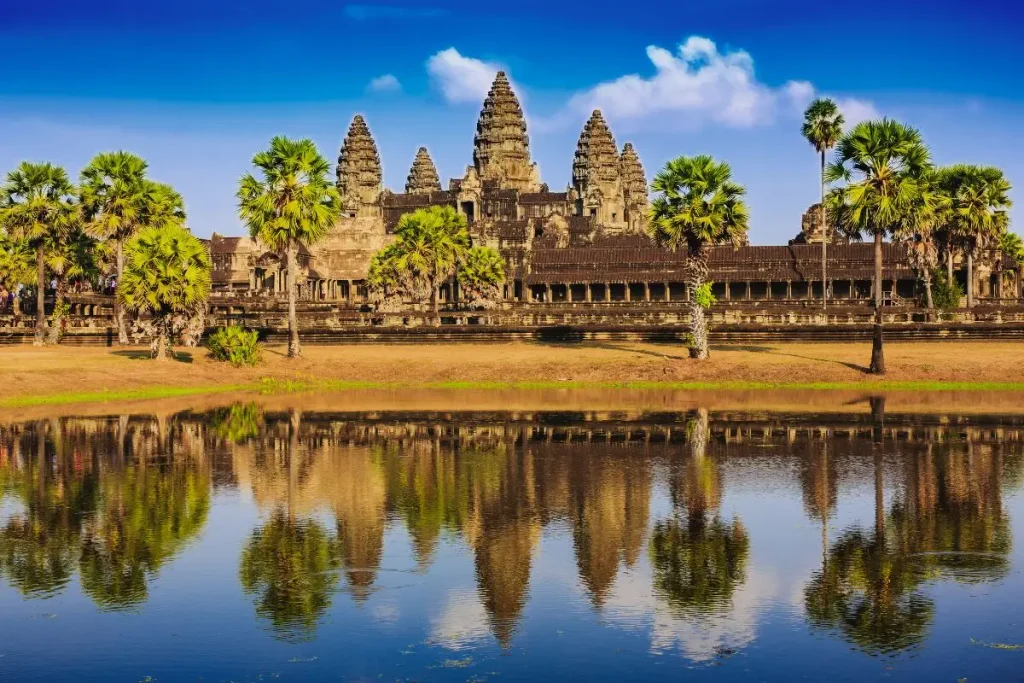
What not to miss. Sunrise over the central towers reflected in the northern pond. Ta Prohm, where strangler figs have grown through and around the stonework. The Bayon in Angkor Thom, with more than 200 serene stone faces looking in every direction. Banteay Srei, an hour out, for the finest carving anywhere on the site. November to February is dry and cooler. Buy a three-day pass; one day is not enough.
16. Amazon Rainforest
Why visit. Around 5.5 million square kilometres of forest holding roughly ten percent of all known species, and the closest thing on the planet to a sensory environment humans did not design. The noise at night is the thing people remember: frogs, insects and howler monkeys in continuous overlapping layers.
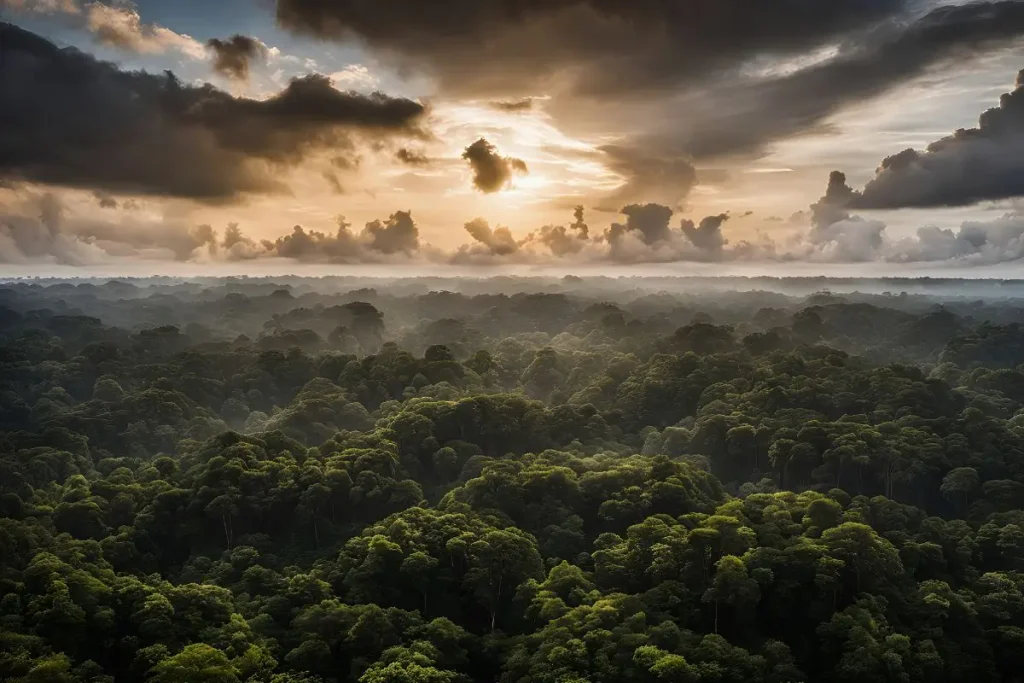
Best ways to experience the rainforest. Ecuador’s Yasuní and Peru’s Tambopata and Manú offer excellent wildlife density with good lodge infrastructure. Brazil’s Manaus gives you the Meeting of the Waters, where the black Rio Negro and sandy Solimões run side by side without mixing for kilometres. From December to May, high water lets canoes travel through the flooded canopy. June to November exposes forest trails and river beaches. Choose lodges with genuine community ownership or research partnerships.
17. Banff National Park, Canada
Why visit. Canada’s first national park, 6,600 square kilometres of the Rockies with glacier-fed lakes in a turquoise so saturated that first-time visitors assume the photographs are edited. They are not it is rock flour, glacial sediment suspended in the water, scattering light.
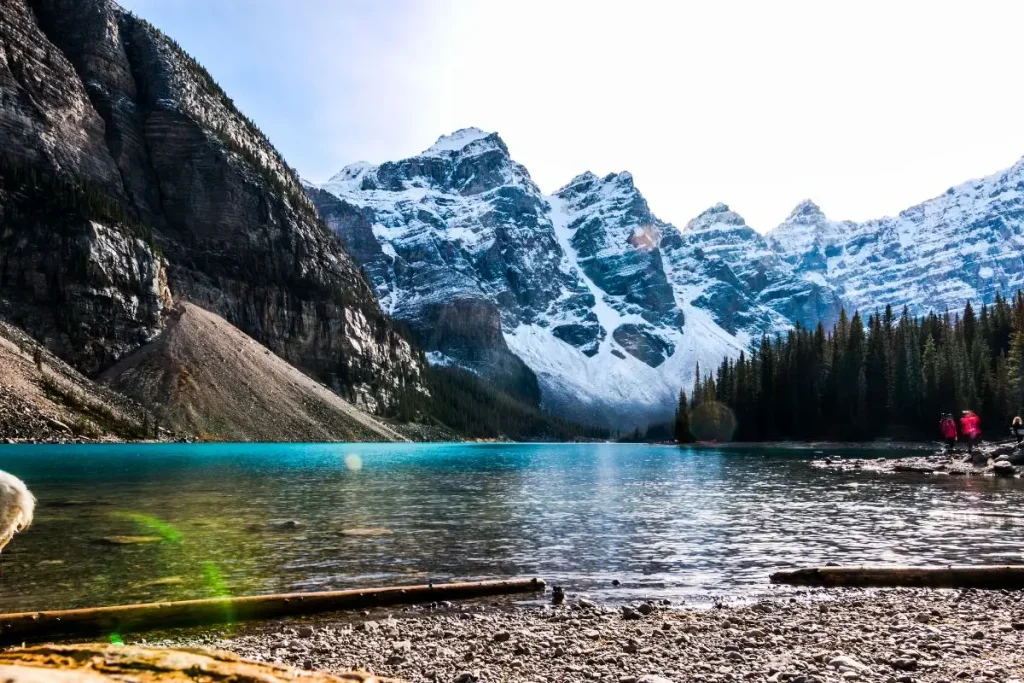
Best outdoor experiences. Lake Louise and Moraine Lake, the latter now reachable only by shuttle or organised transport, so plan ahead. The Icefields Parkway to Jasper, one of the great mountain drives, with a stop at the Columbia Icefield. Hikes to Plain of Six Glaciers or up to Lake Agnes Tea House. Canoeing on Emerald Lake. June to September for hiking, when the lakes have fully thawed; December to March for skiing and frozen-lake walks.
18. Bali, Indonesia
Why visit. A Hindu island in the world’s largest Muslim country, where ritual is woven into everyday life offerings on doorsteps every morning, temple ceremonies most weeks, and a landscape of terraced rice paddies engineered by a thousand-year-old water-sharing system.
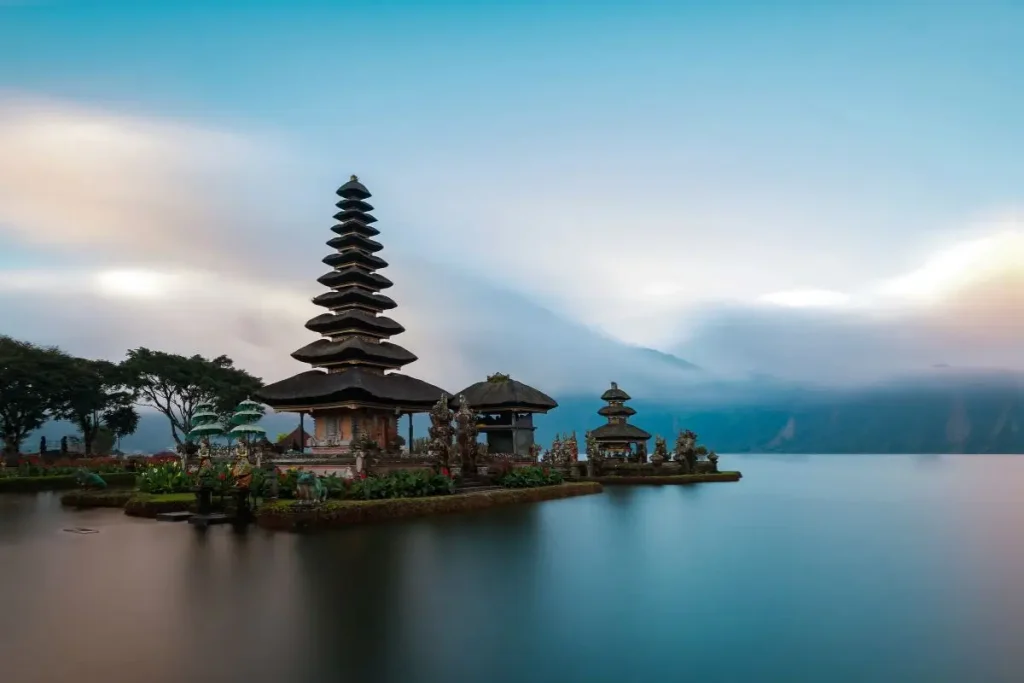
Best experiences. The subak terraces at Jatiluwih, quieter and more authentic than Tegallalang. Uluwatu temple on its cliff at sunset with a kecak performance. Purification ritual at Tirta Empul. Sunrise from Mount Batur. Day trips to Nusa Penida for the cliff coastline, and diving at Menjangan or with the mola mola off Nusa Lembongan. April to October is the dry season. Base yourself away from the southern beach strip if you want the island the brochures describe.
19. Colosseum, Rome
Why visit. A 50,000-seat amphitheatre finished in 80 CE, with a retractable awning system, a network of lifts and trapdoors under the arena floor, and a crowd-flow design that modern stadium architects still study. Standing on the arena floor and looking up at the tiers gives you a very direct sense of what a Roman crowd felt like.
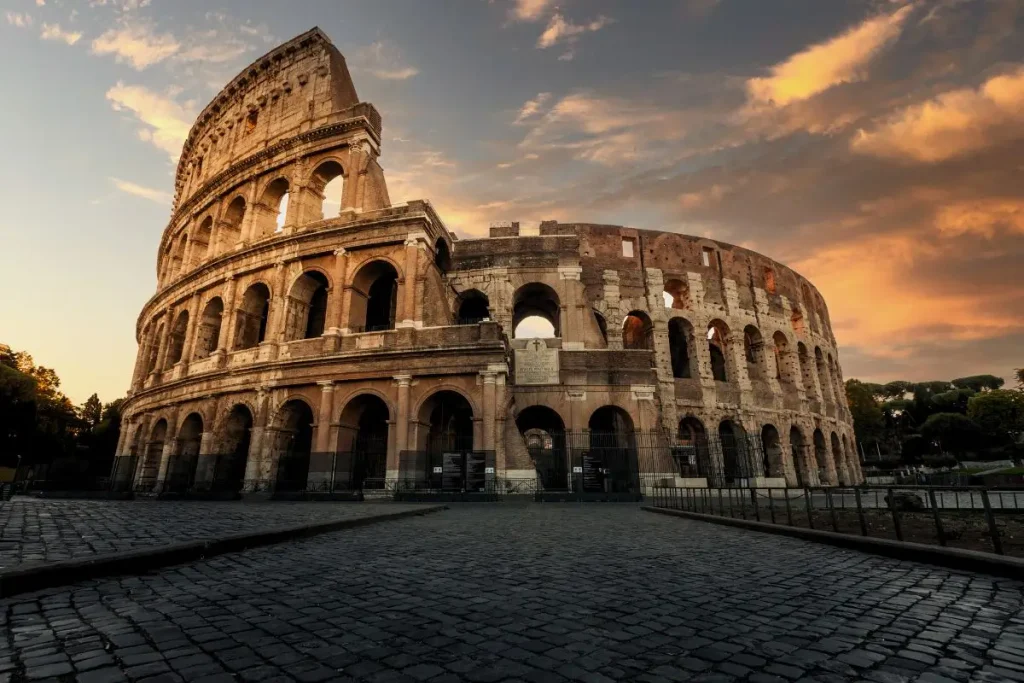
Nearby historic attractions. Tickets that include the underground hypogeum and the arena floor are limited and sell out quickly, so book weeks ahead. The standard ticket also covers the Roman Forum and Palatine Hill allow half a day. Within walking distance: the Pantheon, still roofed by the largest unreinforced concrete dome ever built, and Trajan’s Market. Spring and autumn are far more comfortable than a Roman August.
20. Antarctica
Why visit. The most remote of all the places to visit once in a lifetime, and the continent that has no permanent human population, no native land mammals, and ice up to four kilometres thick. It is the only place on this list where you will see a landscape that has not been shaped by people at all. Most visitors describe the silence first glacial silence, broken by ice cracking somewhere out of sight.
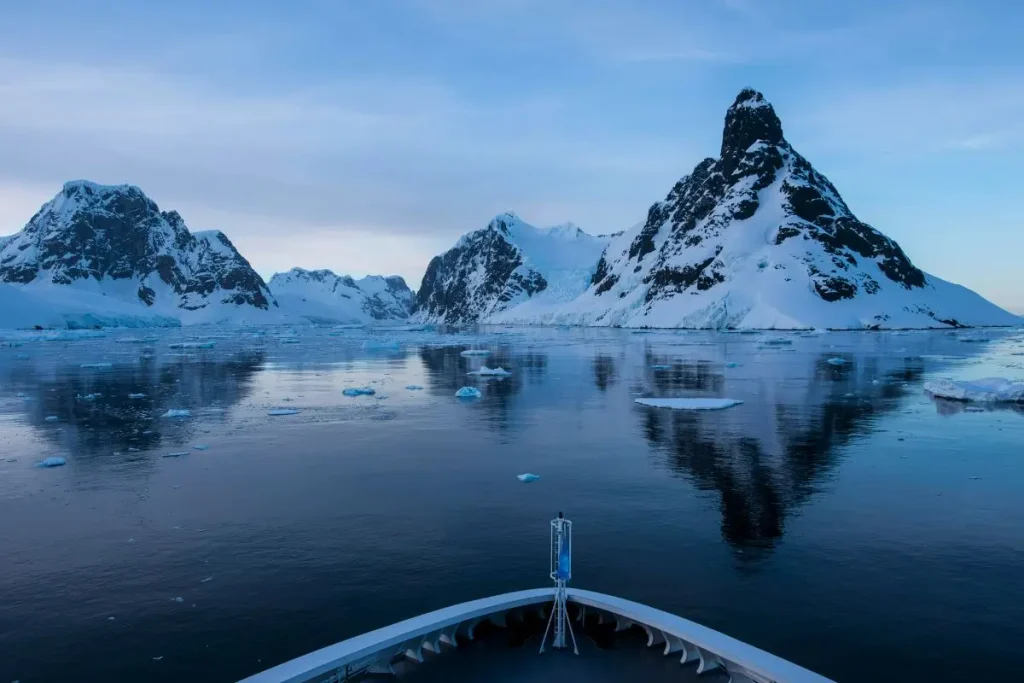
What to expect. The season runs November to March. November brings pristine ice and penguin courtship, December and January give the warmest weather, longest days and hatching chicks, and February and March are best for whales. Most trips sail from Ushuaia across the Drake Passage, two days each way and occasionally rough; fly-cruise options skip the crossing for a significant premium. Expect zodiac landings, expedition staff and lecture programmes rather than conventional cruising.
21. Pamukkale, Türkiye
Why visit. Calcium-rich thermal springs have spilled down a hillside for millennia, depositing white travertine in a cascade of terraces and shallow pools. The name means “cotton castle”, and from a distance it looks like a frozen waterfall. On top sit the ruins of Hierapolis, the Roman spa city built to exploit the same springs.
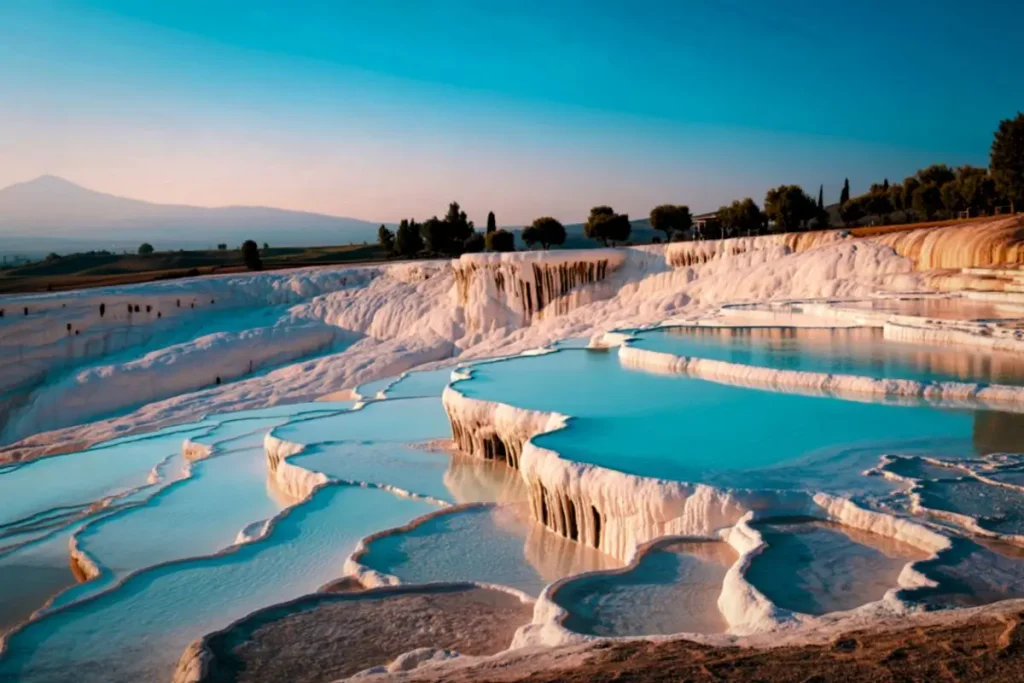
Best time to go. Spring and autumn for mild weather. Late afternoon is best, when the low sun turns the white terraces gold and orange and the day-trip coaches have left. You walk the terraces barefoot, which is required to protect the surface. Cleopatra’s Pool at Hierapolis lets you swim among submerged marble columns, and the site’s necropolis and theatre are worth an hour on their own.
22. Serengeti National Park, Tanzania
Why visit. For anyone ranking places to visit once in a lifetime by wildlife alone, this is the answer. Nearly 15,000 square kilometres of open plain hosting the largest overland animal migration on Earth: roughly 1.5 million wildebeest and several hundred thousand zebra moving in a continuous annual circuit. The Serengeti offers the sheer scale that its neighbours cannot grassland to the horizon in every direction, with an acacia and a cheetah somewhere in the middle of it.
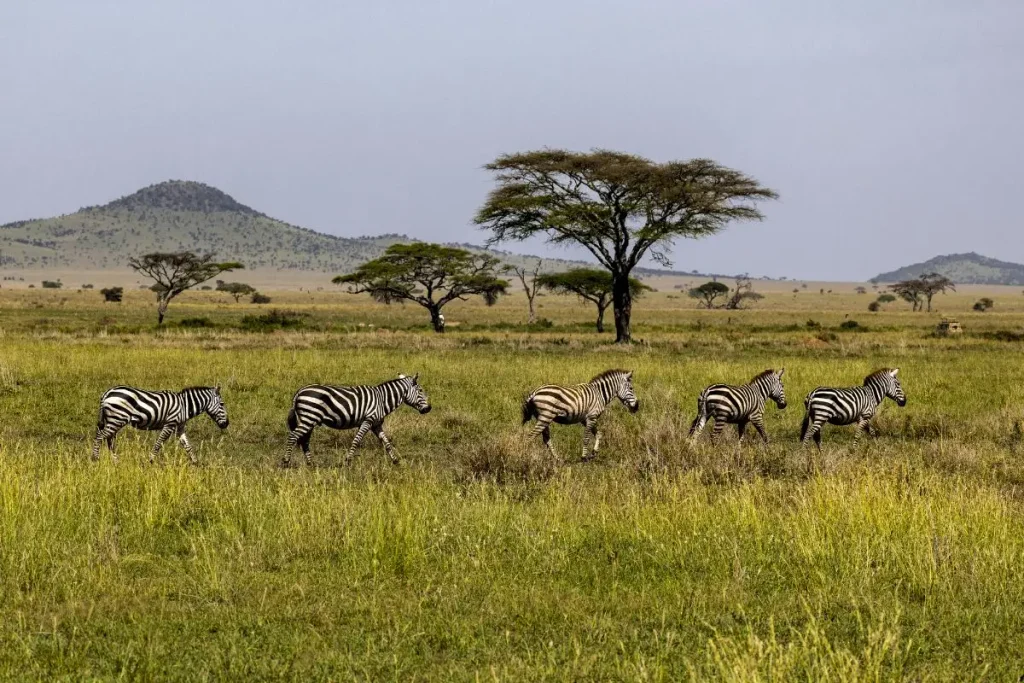
Wildlife and safari highlights. January to March, the herds calve on the southern short-grass plains, with hundreds of thousands of births in a few weeks and predators in close attendance. May to June brings the Grumeti crossings, and July to September the Mara River drama in the north. The central Seronera valley has resident big cats year-round. Combine with the Ngorongoro Crater, an intact caldera holding one of Africa’s densest wildlife concentrations.
23. The Dead Sea, Jordan & Israel
Why visit. The lowest exposed point on the planet’s surface, more than 400 metres below sea level, with water so saline that floating is involuntary you cannot sink even if you try. The mineral mud is used in cosmetics worldwide, and the light at this depth is filtered through an extra layer of atmosphere, which softens everything.
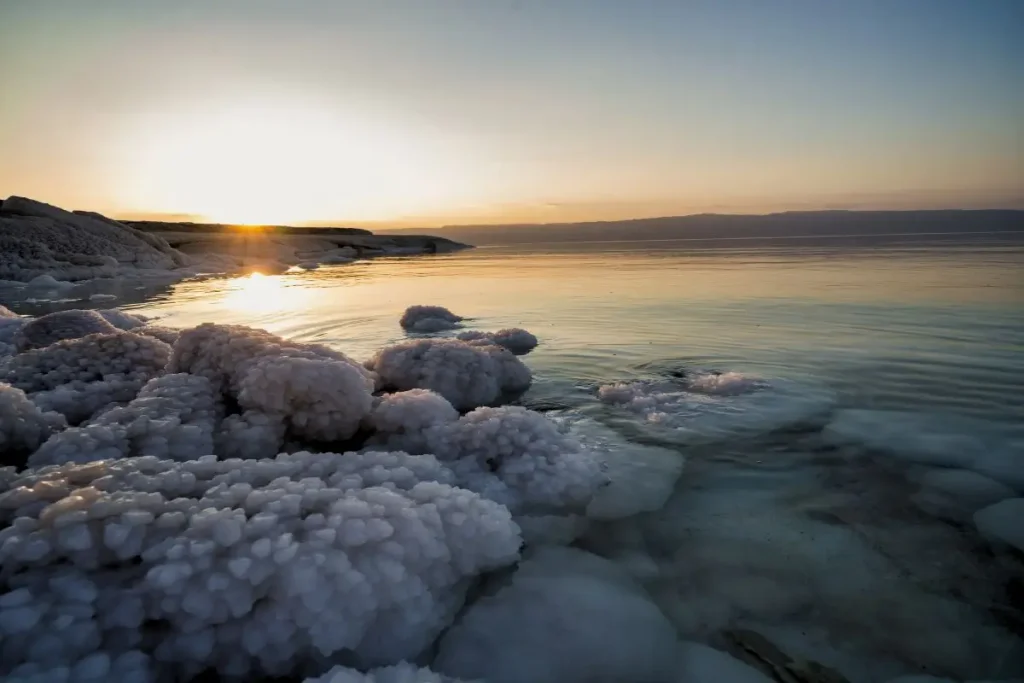
What makes it unique. No fish, no plants, nothing living in the water at all, hence the name. The sea is also shrinking by around a metre a year, which makes this one of the more time-sensitive entries on the list. On the Jordanian side, combine it with the Ma’in hot springs and Mount Nebo. On the Israeli side, with Masada at sunrise and the Ein Gedi oasis. Keep the water out of your eyes and do not shave beforehand. Check current government travel advisories for the region before booking.
How to Choose the Best Places to Visit Once in a Lifetime
Twenty-three is too many for one lifetime of annual leave. Narrow your places to visit once in a lifetime by the kind of experience you actually want, rather than by the fame of the name.
Best destinations for adventure. Machu Picchu on the Inca Trail, the Grand Canyon by raft, Antarctica, Salar de Uyuni, and the wilder unrestored sections of the Great Wall. These involve physical effort, altitude, cold or long travel days, and the reward is proportional.
Best destinations for nature and wildlife. Serengeti, Kenya’s Masai Mara, the Great Barrier Reef, the Amazon, and Banff. Prioritise timing over everything here — wildlife destinations have narrow windows where the experience is transformed rather than merely good.
Best destinations for culture and history. Petra, Angkor Wat, Kyoto, the Pyramids of Giza, the Colosseum, the Taj Mahal and the Great Wall. These reward preparation more than any other category. An hour of reading beforehand roughly doubles what you see.
Best destinations for relaxation. Bora Bora, Santorini, Bali, the Dead Sea and Pamukkale. Still spectacular, but you can do them without a 4am alarm or a permit booked eight months ahead.
If you want one trip to cover several categories at once, Türkiye pairs Cappadocia with Pamukkale, Jordan pairs Petra with the Dead Sea, and Tanzania and Kenya combine easily into a single East African itinerary.
Tips for Planning a Once-in-a-Lifetime Trip
Best time to travel. Most places to visit once in a lifetime have a narrow ideal window, and getting it right matters more than any other planning decision. For most destinations on this list, the shoulder season is the sweet spot: the month either side of peak gives you nearly the same conditions with a fraction of the crowds and noticeably lower prices. The exceptions are wildlife and natural events — migrations, mirror season, coral spawning, penguin hatching — where the calendar is set by the animals, not by tourism.
How far in advance to plan. Antarctica, Inca Trail permits, gorilla or migration-season safari camps and Bora Bora overwater villas need eight to twelve months. Popular timed-entry sites like the Colosseum underground, Moraine Lake shuttles and Machu Picchu circuits need weeks to a few months. Most other things can be assembled within about six weeks, though you will pay for the flexibility.
Budget considerations. The places to visit once in a lifetime on this list vary enormously in cost. Antarctica, French Polynesia and premium safari are the expensive tier and are difficult to do cheaply without losing the point of the trip. Cappadocia, Petra, Angkor Wat, Ha Long Bay and Bali deliver a comparable sense of scale at a fraction of the price. A useful rule: spend on the things that cannot be repeated later, such as a permit, a season or a guide who genuinely knows the site, and economise on accommodation and transport.
Travel insurance and essential preparations. Check that your policy covers the specific activities you have planned — diving, trekking above a certain altitude, and polar or remote travel are commonly excluded from standard cover, and medical evacuation from Antarctica or the Amazon is extraordinarily expensive without it. Confirm visa requirements and passport validity rules early, since several countries on this list require six months of remaining validity. Check whether any vaccinations or antimalarial cover are recommended for your destination, and speak to a pharmacist or travel clinic about carrying prescription medicines abroad, as some routine medications are restricted in certain countries. Finally, allow buffer days around weather-dependent highlights like balloon flights and boat crossings, so that one bad morning does not cost you the thing you came for.
Frequently Asked Questions About Places to Visit Once in a Lifetime
What are the best places to visit once in a lifetime? The best places to visit once in a lifetime for most travellers are Machu Picchu, the Pyramids of Giza, Petra, Angkor Wat, the Serengeti and Antarctica. Each combines a scale or rarity that cannot be found elsewhere with a genuine sense of arrival. If you can only pick one, choose by category — history, wildlife, landscape or water — rather than trying to rank them against each other.
What is the most beautiful place to visit once in a lifetime? Beauty is the hardest thing to rank, but three places to visit once in a lifetime dominate most travellers’ answers: Bora Bora for colour, Salar de Uyuni in mirror season for pure strangeness, and Banff for classic mountain scenery. For built beauty rather than natural, the Taj Mahal is close to unanimous.
What are the best places to visit once in a lifetime on a budget? Cappadocia, Petra, Angkor Wat, Ha Long Bay, Bali and Pamukkale all deliver world-class experiences at moderate cost, especially outside peak season. Kyoto is more affordable than its reputation suggests if you use business hotels and trains. The Grand Canyon is inexpensive once you are in the United States. Antarctica, Bora Bora and premium safari are the genuinely costly entries.
How do I choose a once-in-a-lifetime destination? Choosing among places to visit once in a lifetime starts with what you want to feel rather than what you want to see. Ask whether you want physical challenge, wildlife, deep history, or genuine rest — then narrow within that category by the season you can actually travel in. Finally, weigh urgency: coral reefs, glaciers and the Dead Sea are all changing measurably within a human lifetime, which is a reasonable argument for moving those up the list.
Which of these places to visit once in a lifetime is at the top of your list? Tell us in the comments, or start planning with our destination guides.