

By Worldly Travels Editorial Team · Last verified: October 2026
Quick Answer
Renting a car in Scotland is the simplest way to reach the Highlands, Skye and the west coast if your trip goes beyond Edinburgh and Glasgow. Most visitors can drive in Scotland on their home licence for up to 12 months. In October 2026, comparison sites showed a small hire car in Edinburgh averaging roughly £35 to £60 a day, before fuel, insurance extras and any young driver fee. The rules that catch visitors out are driving on the left, a drink-drive limit lower than England’s, and single-track roads where you pull into passing places to let others by.
Our verdict: Worth it for the Highlands, Skye and island routes. Skip it if you are only visiting Edinburgh and Glasgow: trains connect them well and both city centres have Low Emission Zones.
Table of Contents
Do You Actually Need a Car in Scotland?
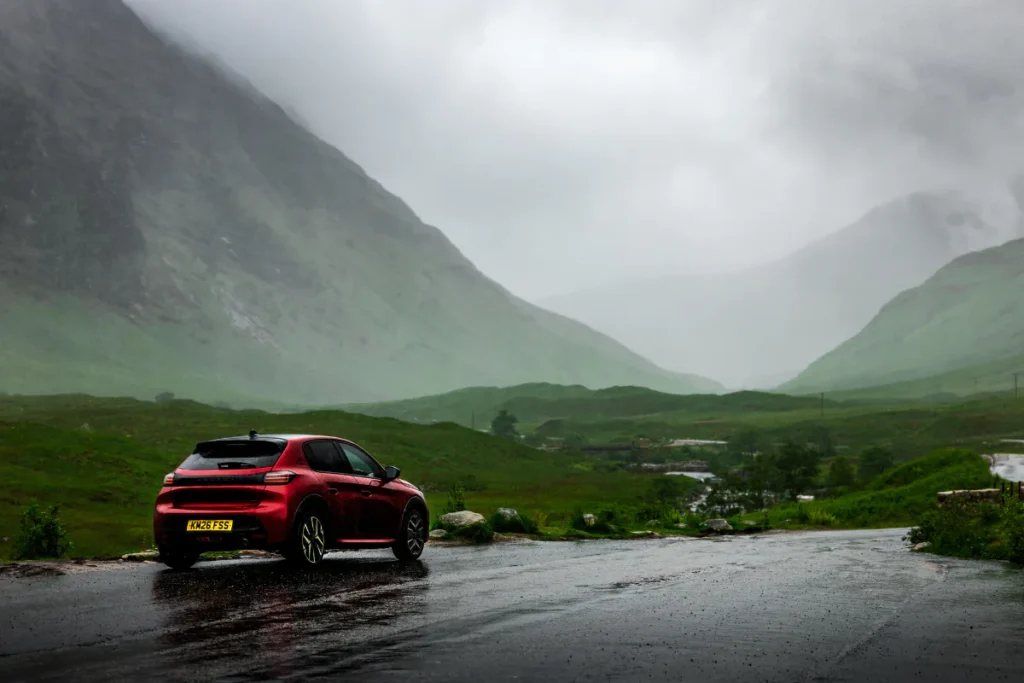
Renting a car in Scotland makes sense if your route includes Glencoe, Skye, the far north or the islands, where buses are infrequent and many sights sit at the end of minor roads. You do not need one for a city trip, or for a route that follows the main rail lines between Edinburgh, Glasgow, Stirling, Perth, Inverness and the west Highland line.
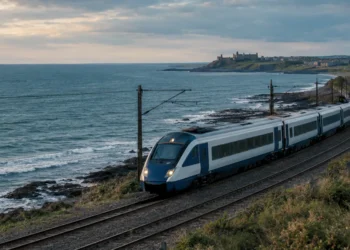
If you would rather not drive on the left at all, our car-free route covers the trains, timings and where to stay near stations:
For a full route with day-by-day driving times, see our 10-day Scotland itinerary.
What You Need for Renting a Car in Scotland
- Your driving licence. Visitors can drive a car in Great Britain on a full, valid licence for 12 months from the date they last entered the country. This applies to licences from any country.
- An International Driving Permit (sometimes). UK law does not require one for visitors, but some rental companies ask for it, especially when a licence is not in English. Check the terms of your specific booking.
- The right age. There is no single minimum age for car hire in the UK. Most companies rent from 21, some from 23 or 25, and drivers under 25 usually pay a daily young driver surcharge. Check the age rules on the exact offer before you pay.
- A credit card in the main driver’s name. Rental companies use it to hold the security deposit. If you decline their excess cover, that hold is usually much larger (see the insurance section).
Real Costs of Renting a Car in Scotland
| Item | Typical cost | Notes |
|---|---|---|
| Small car, Edinburgh, per day | £35 to £60 average | Comparison-site averages, October 2026. Summer dates usually price higher. |
| Small car, Edinburgh, one week | about £210 to £230 average | Same sources. Weekly rates are cheaper per day than short hires. |
| Rental-desk excess waiver | about £20 to £35 per day | Offered at the counter to reduce your excess to zero. |
| Excess if you decline that cover | £500 to £2,500 | The amount you pay if the car is damaged or stolen. |
| Standalone excess insurance | £15 to £40 per trip, £40 to £60 per year | Bought separately before you travel. Check you are eligible where you live. |
| Petrol (unleaded) | 174.6p per litre (about £6.61 per US gallon) | UK average, week of 19 October 2026. |
| Diesel | 199.3p per litre (about £7.54 per US gallon) | UK average, week of 19 October 2026. Diesel passed £2 a litre for the first time in early October. |
| Fuel for 1,000 miles at 45 mpg (UK) | about £176 petrol, £201 diesel | Our calculation from the prices above. 45 UK mpg is about 37.5 US mpg. |
| Low Emission Zone penalty | £60, doubling for repeat entries, capped at £480 for cars | Halved if paid within 14 days. Applies in Edinburgh, Glasgow, Dundee and Aberdeen. |
Prices change daily, so compare current rates for your dates on Economybookings.
Manual or Automatic?
The cheapest cars on UK hire sites are usually manual. Automatics cost more and are the first to sell out in summer. If you are renting a car in Scotland and do not drive a manual at home, book an automatic early: learning a clutch while driving on the left, on a narrow Highland road, is a risk you do not need.
QEEQ lets you filter results by transmission, which makes automatics easier to find.
Where to Pick Up Your Car
Edinburgh Airport, Glasgow Airport and Inverness are the usual pick-up points. Collecting at an airport rather than a city centre office lets you skip city traffic and the Edinburgh and Glasgow Low Emission Zones on your first drive. If you plan to collect in one city and return in another, check the one-way fee before booking: it can change which route makes sense.
See which companies have cars at Edinburgh Airport for your dates.
5 UK Driving Rules That Catch Visitors Out
- Drive on the left. At roundabouts, give way to traffic coming from your right and go round clockwise.
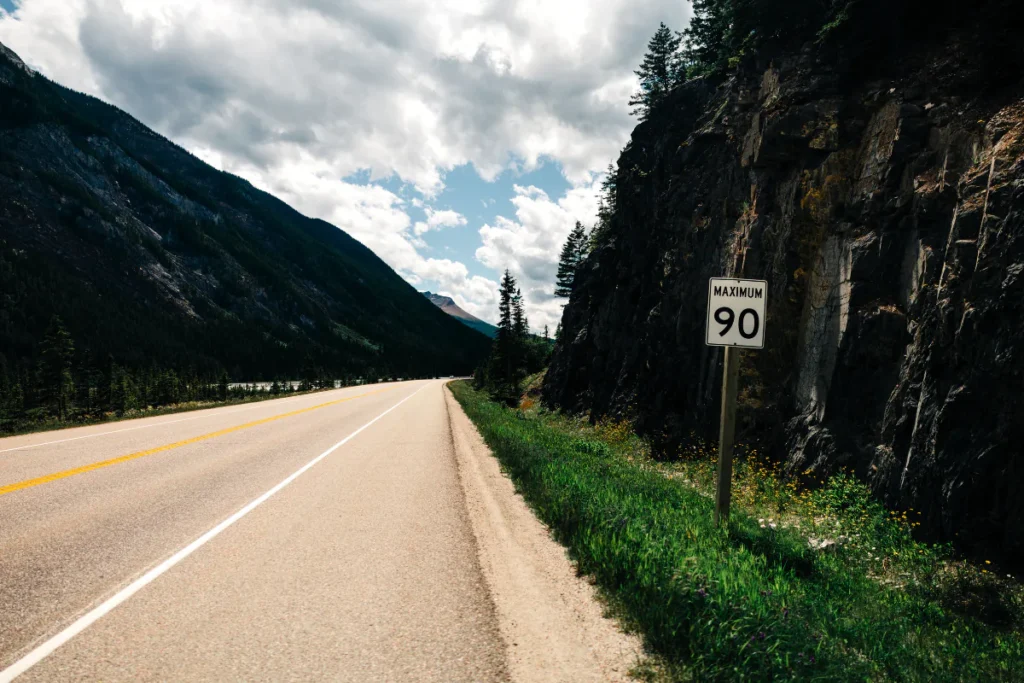
- Speed limits are in miles per hour. For cars: 30 mph in built-up areas, 60 mph on single carriageways, 70 mph on dual carriageways and motorways, unless signs say otherwise. Scotland considered cutting the single carriageway limit to 50 mph but decided against it, so 60 mph still applies.
- Scotland’s drink-drive limit is lower than the rest of the UK. The limit is 22 micrograms of alcohol per 100 ml of breath (50 mg per 100 ml of blood). One drink can put you over it, and you can still be over the limit the morning after. The safe number is zero.
- No phone in your hand. Holding a phone or similar device while driving, including at traffic lights or in a queue, carries a £200 fine and 6 penalty points.
- Low Emission Zones. Edinburgh, Glasgow, Dundee and Aberdeen have zones that petrol cars must meet Euro 4 to enter (generally registered from 2006) and diesel cars Euro 6 (generally from September 2015). Most hire cars are recent enough, but the penalty goes to the registered keeper, which is the rental company, and it will pass the charge to you.
Single-Track Roads and Passing Places
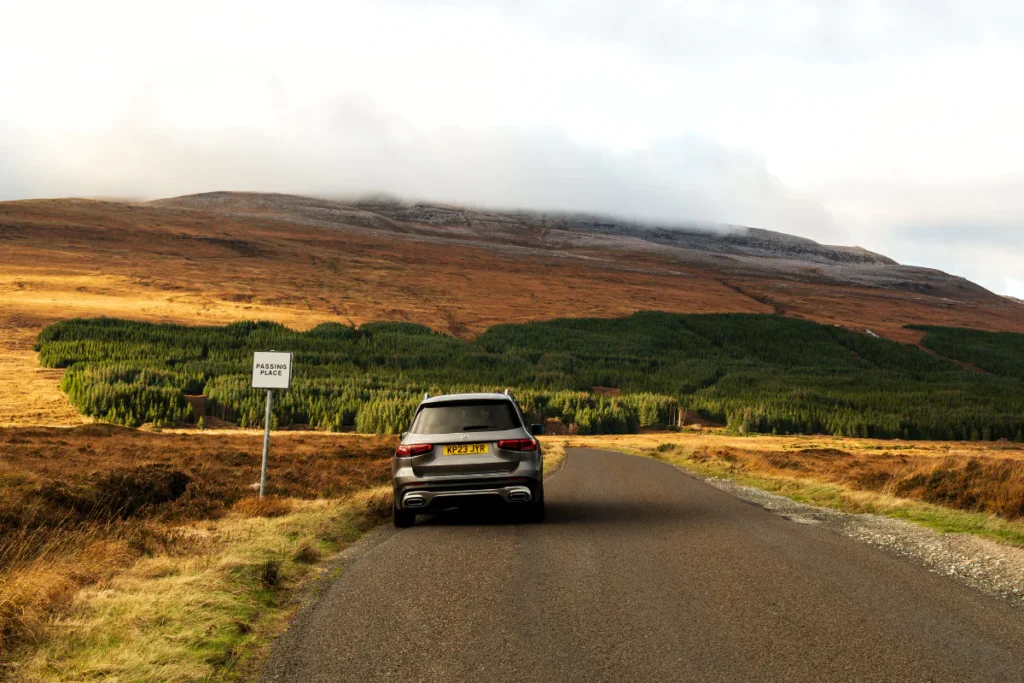
Much of the Highlands and Skye is reached by single-track roads: one lane wide, with passing places at intervals, often marked by a sign. The Highway Code (rules 155 and 156) sets out how to use them:
- If a vehicle comes towards you, pull into a passing place on your left, or stop opposite a passing place on your right so the other driver can use it. Never cross into a passing place on the right.
- If a driver behind you wants to go faster, pull into a passing place and let them overtake.
- Give way to vehicles coming uphill when you can.
- If needed, reverse to the nearest passing place.
- Slow down for walkers, cyclists and horse riders.
- Do not park in passing places, even for a quick photo.
The legal limit on most of these roads is the national 60 mph, but safe speeds are far lower. Watch for sheep on unfenced roads and deer around dusk, especially where woodland meets the road.
Insurance When Renting a Car in Scotland
When renting a car in Scotland, the hire price normally includes basic cover (often called a Collision Damage Waiver), but it comes with an excess: the amount you pay if the car is damaged or stolen, typically £500 to £2,500. You have three ways to handle it:
- Buy the desk cover. The rental company reduces your excess to zero for a daily fee, often £20 to £35 a day. Simplest option, highest cost.
- Buy standalone excess insurance before you travel. It costs a fraction of the desk price, and many policies also cover tyres, windscreens and the underside of the car, which basic cover often excludes. You decline the desk cover, pay any damage charge first, then claim it back from your insurer.
- Check what you already have. Some credit cards and travel insurance policies include hire car excess cover. Confirm in writing that it covers rentals in the UK before relying on it.
standalone car hire excess insurance
Fuel and Parking in the Highlands
Fuel is expensive in October 2026, and diesel is at record levels, so a petrol car may cost less to run on a long road trip. Check the fuel type when you compare offers. In remote areas, filling stations are far apart and some close early, so fill up in larger towns before long empty stretches. Park only in marked parking areas: lay-bys and passing places on single-track roads are not car parks.
Taking a Hire Car on a Ferry
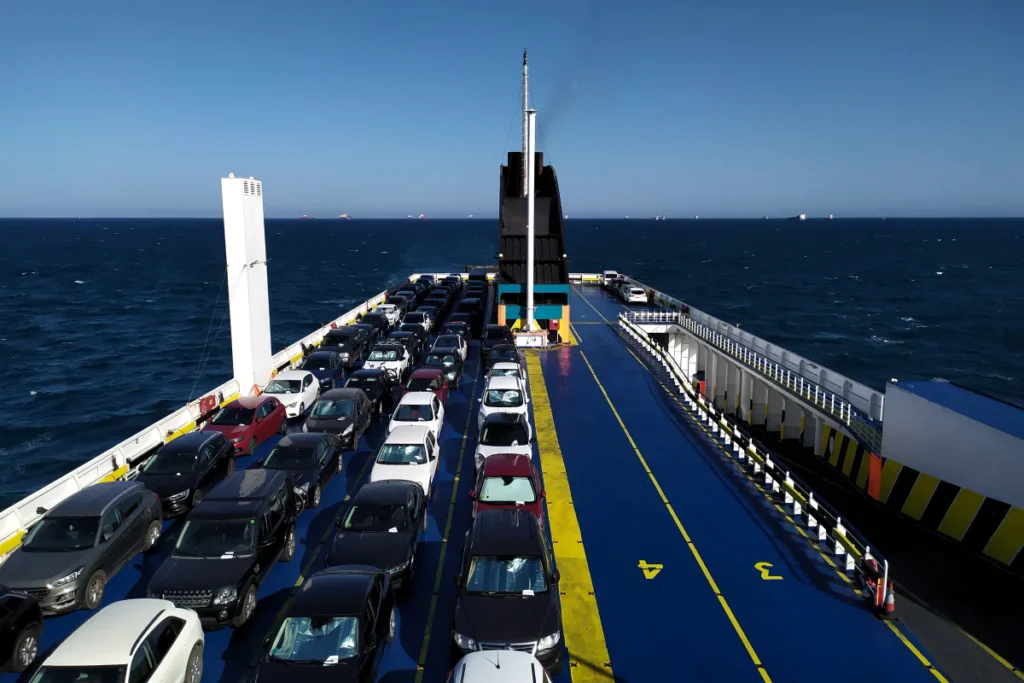
Skye is connected to the mainland by the Skye Bridge, so you can drive there without a ferry. For Mull, Harris, Lewis, Islay and most other islands, ferries are run mainly by CalMac. Book vehicle space in advance for summer travel, as popular sailings fill up. Before booking any ferry, check your rental terms: domestic routes are generally allowed, but crossings to Northern Ireland or Ireland are often restricted.
The Honest Part
- The headline price is rarely the real price. When renting a car in Scotland, add the excess cover or deposit, any young driver fee, the cost of an automatic and any one-way fee before you compare offers.
- Desk excess cover is expensive, but standalone cover has a catch. If you decline the desk cover, expect a large hold on your credit card and to pay for any damage up front before claiming it back. If your card limit cannot take that, the desk cover may be the more practical choice.
- Single-track roads are slower than the map suggests. Plan fewer miles per day than you would at home, especially on Skye and the far north.
- Fuel costs more than most visitors expect right now. At October 2026 prices, 1,000 miles costs roughly £176 in a petrol car and £201 in a diesel.
Frequently Asked Questions
Is renting a car in Scotland worth it? Yes, if you are heading to the Highlands, Skye or the islands, where public transport is limited. For a trip that stays in Edinburgh and Glasgow, trains are easier and you avoid parking costs and Low Emission Zones.
Can I drive in Scotland with a US licence? Yes. Visitors can drive a car on a full, valid licence from any country for 12 months from their last entry into Great Britain. Some rental companies may still ask for an International Driving Permit, so check your booking terms.
What is the speed limit on single-track roads in Scotland? Unless signs say otherwise, the national limit of 60 mph applies. In practice, bends, blind summits, oncoming traffic and animals mean safe speeds are much lower.
Do I need extra insurance to rent a car in Scotland? Basic cover is included, but you remain liable for the excess. You can reduce it with the rental company’s desk cover, a standalone excess policy bought in advance, or cover from your credit card or travel insurance if it includes UK rentals.
Can I take a rental car to the Isle of Skye? Yes. You can drive over the Skye Bridge with no ferry needed. For other islands, check that your rental terms allow ferry crossings and book vehicle space early in summer.
Is Scotland’s drink-drive limit different from England’s? Yes. Scotland’s limit is lower: 22 micrograms per 100 ml of breath, compared with 35 in England and Wales.
Related guides:
Trains to Scotland | Book Cheap Train Tickets to Scotland
10 Unique Places to Road Trip in Scotland
Sources
- GOV.UK: Driving in Great Britain on a non-GB licence
- GOV.UK: Speed limits
- The Highway Code (GOV.UK), rules 155 and 156
- mygov.scot: Drink-drive limit in Scotland
- Scottish Government: Drink-drive limit policy
- Low Emission Zones Scotland
- Transport Scotland: Low Emission Zones introduced across Scotland
- Road Safety GB: Plans to reduce speed limits on Scottish roads dropped
- GOV.UK: Weekly road fuel prices
- House of Commons Library: Petrol and diesel prices (October 2026)
- Skyscanner: Car hire in Edinburgh
- KAYAK: Edinburgh car hire
- Quotezone: Car hire excess insurance
- KAYAK UK: Car hire insurance
- CalMac Ferries


Comments 4